
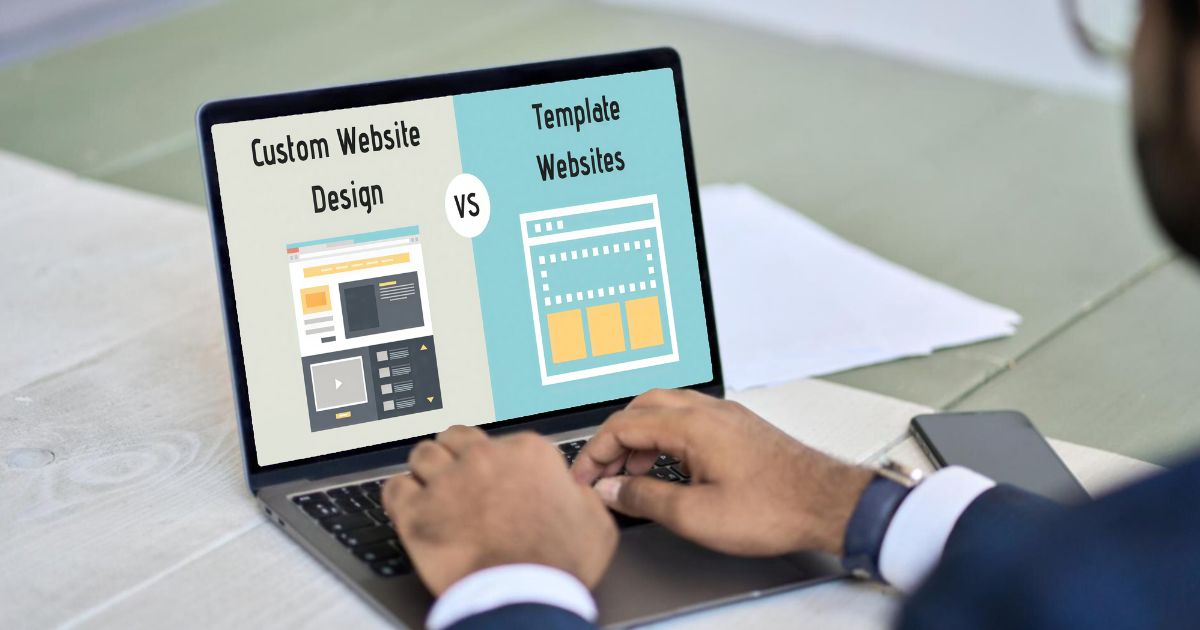
Custom Website Design vs Template: Which One to Choose for Your Business in 2026?
 Published:
April 30th, 2026
Published:
April 30th, 2026

Custom website design and template websites offer distinct benefits depending on business needs, budget, and scalability goals. While custom designs provide flexibility, template websites offer affordability and faster setup.

Sahil Bansal
Founder & CEO
12 min read
Last Updated: 27 July, 2026
There is no denying the fact that your website is the first point of interaction that a potential customer has with your business.
In a digital-first landscape, having a website is much more than showcasing your online presence – it’s about representing your brand identity and credibility.
Whether you are launching a startup or scaling an already established enterprise, choosing an apt website design is critical for your online success. However, creating a stellar website demands choosing the right type of template.
That’s why the debate between “custom website design vs template ” keeps getting hotter and hotter. Which path makes more sense for your business? It is crucial to understand the nuances of both website development options.
This blog post gives you a clear differentiation between both elements of website design, so that you can choose the right option for your business’s online growth in 2026.
Key Takeaways:

What You’ll Learn: Understand the key differences between custom website design and website templates, including design flexibility, cost, SEO, scalability, and long-term value.
Who This Guide Is For: Business owners, startups, and growing companies planning to build a new website or redesign an existing one and looking for the best approach based on their goals and budget.
Key Comparison Areas: Compare both options across the factors that matter most, such as customization, development time, performance, maintenance, branding, and scalability.
How This Helps You Decide: Learn when a custom website is the right investment for long-term growth and when a website template is the more practical solution for faster, budget-friendly website launches.
What You’ll Walk Away With: A clear framework for choosing the website solution that aligns with your business objectives, budget, and future growth plans, helping you make a confident and informed decision.
Custom Website Design or Website Templates? Compare Before You Decide
| Feature | Custom Website Design | Website Template |
|---|---|---|
| Best For | Growing businesses, brands, and enterprises | Startups, small businesses, and simple websites |
| Design | Fully customized and unique | Pre-designed with limited customization |
| Cost | Higher upfront investment | Budget-friendly and affordable |
| Development Time | Longer development process | Faster to launch |
| Scalability | Easily grows with your business | Limited as business needs expand |
| SEO & Performance | Optimized for speed and advanced SEO | Good for basic SEO but depends on the template |
| Maintenance | Requires ongoing technical support | Easier to maintain with platform updates |
| Long-Term Value | Better for long-term growth and branding | Best for short-term or basic website needs |
What is a Custom Website Design?
Choosing a custom website design is a wise idea. It is considered a professional website designer who creates your website from scratch. There is no need to use WordPress or other page builders like Gutenberg and Elementor to create a website. From visual elements to functionalities, everything is created from the ground level.
A designer builds your website, keeping your requirements and long-term objectives in consideration. Therefore, a custom-designed website generally takes more time to build. The ultimate aim is to make your website look different from others in the market.
Pros of Custom Website Design
Unique Brand Identity: A custom website is designed for your business to establish a distinctive online presence. With personalized layouts, visuals, and functionality, your brand can outperform competitors.
Better User Experience: Custom websites are designed in accordance with the target audience so that businesses can create smoother navigation and optimized user journeys to improve customer engagement.
Better Scalability: As your business grows, a custom website can easily adapt to current requirements, such as add-on features, integrations, and functionalities, without major limitations.
Improved Performance and Speed: Custom-built websites are cleaner and more optimized than template-based websites. Since only necessary features are included, they offer better loading speed.
SEO-Friendly Structure: Custom websites can be developed with advanced SEO practices in mind as they support your long-term SEO strategy
Greater Flexibility: Businesses take complete charge of design, features, integrations, and functionality so that a website can align perfectly with business objectives and customer needs.
Cons of Custom Website Design
Higher Development Cost: Custom website design are expensive than template-based solutions because it requires professional designers, developers, and strategic planning.
Longer Development Time: Your website is built from scratch, and the development process can take significantly more time.
Requires Regular Maintenance: Custom websites need continuous updates, technical support, and maintenance to ensure better performance and compatibility over time.
Dependence on Developers: Businesses rely heavily on developers for updates, feature additions, or troubleshooting, especially if the website includes complex custom functionalities.
What is a Website Template?
A website template is called a pre-designed layout or framework for your website. How your online platform looks is already decided in a template. A template comes loaded with built-in options and ready-to-use functionalities.
You need to first set up your WordPress-themed website. Coding abilities are not required to set up a website. You can use web builder templates from popular platforms like WordPress, Webflow, and Wix.
Pros of Website Templates
Cost-Effective Solution: Website templates are affordable and ideal for startups, small businesses, and individuals working with limited budgets.
Faster Website Development: In templates, the design structure is already created. Hence, businesses can launch their website much more quickly.
User-Friendly: Website templates are user-friendly and don’t require advanced coding knowledge. Website builders use drag-and-drop functionality to manage content and updates.
Wide Variety of Designs: There are thousands of templates available for different industries and business types that match their branding and requirements.
Built-In Features: Templates have pre-installed features such as contact forms, SEO tools, and responsive designs.
Suitable for Small Projects: For businesses looking for a simple online presence or informational website, templates provide an efficient solution.
Cons of Website Templates
Limited Customization: Templates restrict design and functionality changes as businesses are restricted to work within predefined layouts and features.
Lack of Uniqueness: Since templates are used by multiple websites, businesses struggle to create a unique brand identity.
Performance Issues: Some templates include unnecessary features that can negatively impact website performance.
SEO Limitations: Though many templates are SEO-friendly, they don’t offer advanced optimization capabilities that a fully custom website offers.
Scalability Challenges: As business needs grow, template websites may face limitations when adding complex features or advanced customizations.
Dependency on Template Updates: Businesses rely on template developers for updates, compatibility fixes, and security patches. If a template becomes outdated, it can create technical and security issues.
Custom Website Design vs Template: Which One to Choose?
Understanding the differences between custom websites and templates helps business owners make an informed decision about which to choose for building their website. Both options come with unique advantages in terms of features, performance, cost, flexibility, scalability, and business branding.
Design Uniqueness
A custom website is designed from the ground up as per the needs of your business. Each design element, feature, layout, and visual component is crafted to match your brand identity and business objectives. This helps form a unique online presence that helps businesses stand tall among competitors. Custom websites give creative freedom for companies to create personalized user experiences and distinctive branding.
Templates use pre-designed layouts for multiple users. While some customization can be done, businesses can still work within the restrictions of a template structure. As a result, many template websites may look similar to other websites using the same design. These templates are good for businesses that prioritize convenience over uniqueness.
Flexibility and Customization
Custom websites offer flexibility to add specific features, integrations, customer portals, advanced search systems, or unique functionalities on the basis of your requirements.
This makes custom design ideal for companies with complex workflows or specialized user experiences.
Templates have limited customization options. Colors, fonts, and basic layouts can be modified; advanced functionality needs additional plugins or may not be possible at all. Businesses using templates may eventually face restrictions as their requirements grow.
Cost and Investment
Custom website development needs a larger financial investment as it involves professional designers, strategists, developers, and testing processes. The pricing depends on the functionality of the website.
Templates are generally more affordable. They are available at low one-time costs or through subscription-based website builders. They are a practical option for startups, freelancers, or small businesses with limited budgets.
Development Time
Custom websites are built from scratch. Hence, the entire process takes more time. Planning, wireframing, designing, development, testing, and revisions are the factors that cause longer timelines. Complex websites may take weeks or even months to complete.
Templates allow businesses to launch websites quickly because the structure is already pre-built. In many cases, websites can go live within a few days. They are ideal for businesses needing a fast online presence.
SEO and Performance
Custom websites are better optimized for SEO and performance as developers can create clean code, optimized architecture, faster loading speed, and advanced technical SEO structures. Businesses also have more control over optimization strategies and website performance improvements.
Templates are SEO-friendly, but many contain unnecessary code and features that can slow down performance. Businesses may also face limitations in advanced SEO customization. The quality of SEO largely depends on the template and platform being used.
Scalability
Custom websites are considered highly scalable as they evolve with business growth. New features, better integrations, and advanced functionalities are added as business needs change. This flexibility makes custom development ideal for long-term digital expansion.
Templates can become restrictive when businesses try to scale. Adding advanced systems or custom features may require significant modifications or even a complete redesign later. For rapidly growing businesses, templates may not provide enough long-term flexibility.
Maintenance and Support
Custom websites demand dedicated maintenance and technical support. Businesses rely on developers for updates, troubleshooting, and security management. However, they also have greater control over how updates and changes are implemented.
Template-based platforms offer easier maintenance with the help of automatic updates and built-in support systems. However, businesses remain dependent on third-party template developers and platform providers. If the template becomes outdated, compatibility issues can arise.
Choice for Businesses
Many businesses can generate the benefits of custom versus template websites. If you want to build a strong brand identity or plan for long-term digital growth, choosing a custom website design would be an ideal option.
If you need a website quickly, have a low budget, or your website requirements are simple, you can choose a website template.
Still Deciding? Here’s How to Choose the Right Platform
There is no one-size-fits-all answer when choosing between Webflow and WordPress. The right platform depends on your business goals, technical expertise, budget, and long-term growth plans. If you want an all-in-one solution with modern design capabilities and minimal maintenance, Webflow is an excellent choice.
If your website requires advanced customization, extensive integrations, or complex functionality, WordPress offers greater flexibility. Before making your decision, consider not only your current requirements but also how your website will evolve over time. Whether you choose Webflow or WordPress, Webcazador’s website design and development services ensure your website is built for performance, user experience, and future scalability.
Frequently Asked Questions
Related Posts
Wix vs Shopify vs Squarespace vs WordPress: Which Platform to Choose
Choosing the right website building platform depends on your website goals. Wix is best for beginners, Shopify is ideal for e-commerce growth, Squarespace focuses on premium design, and WordPress offers maximum flexibility.
By Sahil Bansal
Top Web Design Trends Shaping Digital Experiences in 2026
Top web design trends in 2026 include custom illustrations, full-page headers, parallax scrolling, neumorphism, 3D colors, white space, chatbots, video elements, grid layouts, and a strong focus on UX/UI.
By Sahil Bansal
Webflow vs WordPress: Key Differences You Must Know Before Choosing
Webflow offers design control and low maintenance, while WordPress provides flexibility, plugins, and full control for complex websites.
By Sahil Bansal