

Best eCommerce Platform For SEO in 2026
 Published:
April 22nd, 2026
Published:
April 22nd, 2026

For SEO, WooCommerce & Magento lead with control; Shopify & BigCommerce balance ease, while Wix & Squarespace suit simple SEO.

Sahil Bansal
Founder & CEO
13 min read
- Quick SEO Insights for eCommerce Stores
- Our Top Picks for eCommerce Platforms
- Why SEO Matters for Ecommerce Websites?
- 6 Best eCommerce Platform for SEO
- 1. Shopify
- 2. WooCommerce
- 3. BigCommerce
- 4. Magento (Adobe Commerce)
- 5. Wix Ecommerce
- 6. Squarespace
- Key SEO Features to Look for in an Ecommerce Platform
- How to Make an Ecommerce Website SEO-Friendly
- Conclusion
Share This Article
Last updated: July 09, 2026
Choosing an eCommerce platform with strong SEO capabilities provides your online store with a solid foundation for long-term visibility, organic traffic growth, and improved search engine rankings. A well-optimized platform helps search engines better understand your website while enhancing the overall user experience.
In this guide, we explore the 6 best eCommerce platforms for SEO, highlighting their key SEO features, strengths, and capabilities to help you select the right solution for maximizing your online store’s search visibility and digital growth.
Quick SEO Insights for eCommerce Stores

Choose an SEO-friendly platform: Select an eCommerce platform that offers clean URLs, fast performance, mobile responsiveness, and built-in SEO features.
Match the platform to your business: Shopify is great for beginners, WooCommerce offers maximum SEO flexibility, and BigCommerce is ideal for growing businesses.
Focus on technical SEO: Optimize page speed, structured data, internal linking, and mobile usability to improve search rankings.
Create high-quality content: Product descriptions, blogs, buying guides, and FAQs help attract organic traffic and improve keyword visibility.
SEO requires ongoing optimization: Regularly update content, monitor performance, and optimize product pages to maintain long-term rankings and traffic.
A strong SEO foundation drives growth: Combining the right platform with consistent SEO efforts helps increase visibility, attract qualified visitors, and generate more sales.
Our Top Picks for eCommerce Platforms
| eCommerce Platform | Best For | Key Strength |
|---|---|---|
| Shopify | Small to large online stores | Easy to use, reliable hosting, and built-in eCommerce features |
| WooCommerce | WordPress users and businesses needing flexibility | Highly customizable with full control over SEO and functionality |
| BigCommerce | Growing and enterprise-level businesses | Scalable platform with strong built-in SEO and multi-channel selling |
| Wix Ecommerce | Beginners and small businesses | Simple drag-and-drop website builder with easy store management |
Why SEO Matters for Ecommerce Websites?
SEO helps your eCommerce website appear in front of potential customers when they search for products online. Strong SEO improves visibility, drives organic traffic, and increases conversions. Since most online shoppers begin their buying journey through search engines, effective SEO plays a crucial role in attracting the right audience and growing long-term sales.
Key reasons why SEO matters for eCommerce Businesses:
- Drive Organic Traffic: SEO attracts visitors without relying solely on paid ads. More organic traffic increases the likelihood of sales.
- Enhance User Experience: Many SEO practices, like faster loading speed, mobile optimization, and clear navigation, also improve user experience.
- Build Trust and Credibility: Users trust websites that appear at the top of search results. Strong SEO can establish credibility for your store.
- Long-Term Benefits: Unlike ads, SEO results are sustainable. Once your pages rank, they continue bringing traffic with minimal ongoing cost.
Without a strategic SEO approach, even the most well-designed eCommerce websites risk being invisible online, resulting in lost opportunities and revenue.
6 Best eCommerce Platform for SEO
Here are 6 of the best ecommerce platforms for SEO, with easy‑to‑understand explanations of why they’re good choices for helping your online store rank well in search engines like Google:
1. Shopify
Shopify is one of the most popular eCommerce platforms for SEO. It offers built-in optimization features, reliable hosting, and fast performance, making it an excellent choice for beginners and growing online stores.

Key Features
- Built-in SEO tools (meta titles, descriptions, XML sitemaps, alt text).
- Fast, secure, and fully hosted platform.
- Mobile-responsive themes.
- Automatic SSL certificate.
- Large app marketplace for advanced SEO features.
Pricing
| Plan | Price |
|---|---|
| Basic Shopify | $39/month |
| Shopify | $105/month |
| Advanced Shopify | $399/month |
Advanced SEO Tips
- Customize product titles and meta descriptions.
- Optimize images with descriptive filenames and alt text.
- Use SEO apps like SEO Manager or Plug in SEO.
- Add structured data to improve rich search results.
2. WooCommerce
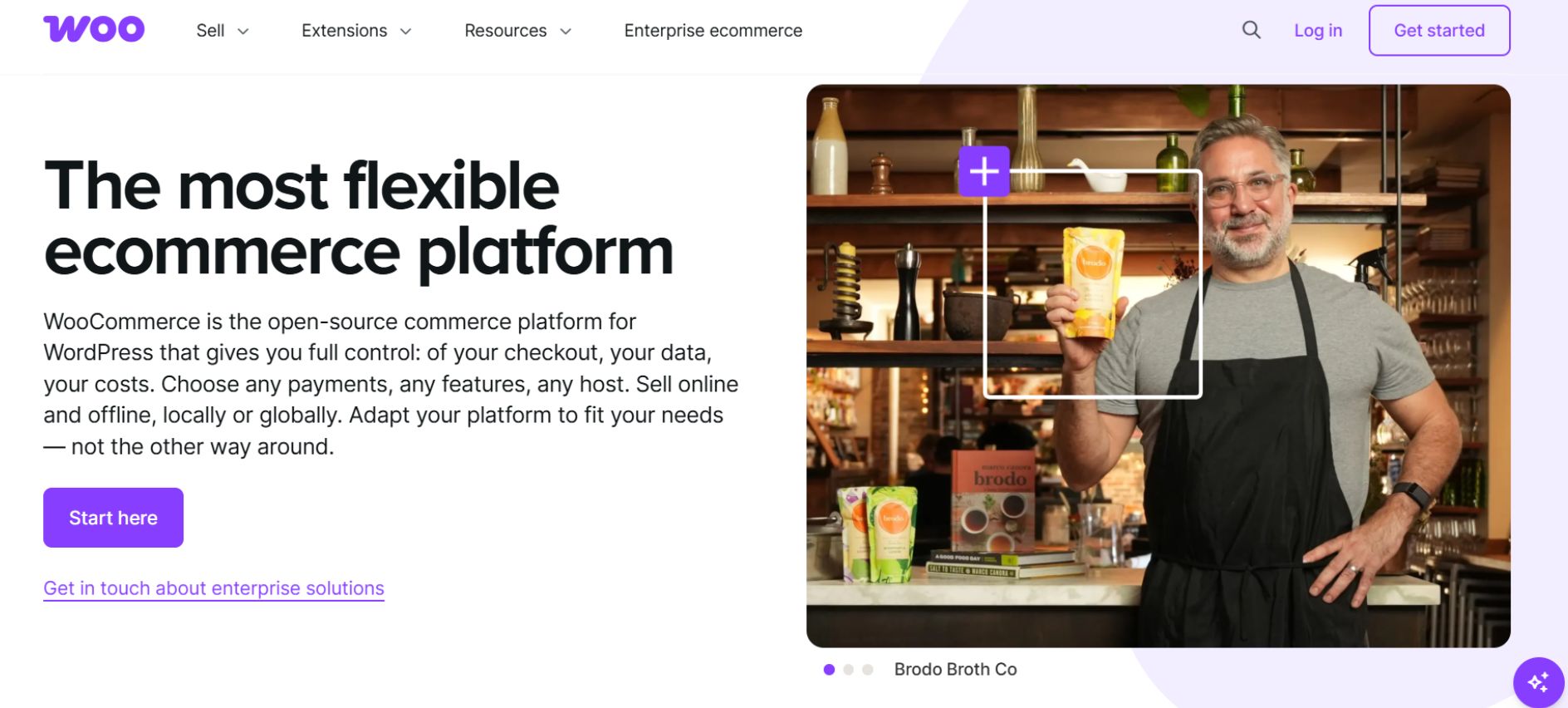
WooCommerce is a powerful WordPress plugin that gives you complete control over your online store’s SEO. It’s ideal for businesses that want advanced customization, content-driven marketing, and full ownership of their website.
Key Features
- Full control over URLs, meta tags, and headings
- Seamless integration with SEO plugins like Yoast SEO and Rank Math
- Excellent blogging and content marketing capabilities
- Highly customizable with thousands of WordPress plugins
- Flexible hosting and scalability options
Pricing
| Plan | Price |
|---|---|
| WooCommerce Plugin | Free |
| Hosting | $5–$30/month |
| Paid Extensions | $29–$299 each |
Advanced SEO Tips
- Use Yoast SEO or Rank Math for on-page optimization.
- Add breadcrumbs to improve navigation and indexing.
- Optimize product pages with relevant keywords.
- Use caching and a CDN to improve page speed.
3. BigCommerce
BigCommerce is a scalable eCommerce platform designed for growing and enterprise businesses. It includes advanced built-in SEO features, making it a strong choice for brands that want to improve visibility in traditional search engines as well as AI-powered search experiences.

Key Features
- SEO-friendly and customizable URL structure
- Built-in XML sitemaps and schema markup support
- Fast, secure hosting with optimized performance
- Multi-channel selling across marketplaces and social platforms
- No third-party apps required for most core SEO features
Pricing
| Plan | Price |
|---|---|
| Standard | $39/month |
| Plus | $105/month |
| Pro | $399/month |
Advanced SEO Tips
- Create keyword-rich product and category URLs.
- Add structured data for products, reviews, and FAQs to improve visibility in Google and AI search results.
- Use canonical URLs to prevent duplicate content.
- Optimize category pages with unique content, headings, and internal links.
4. Magento (Adobe Commerce)
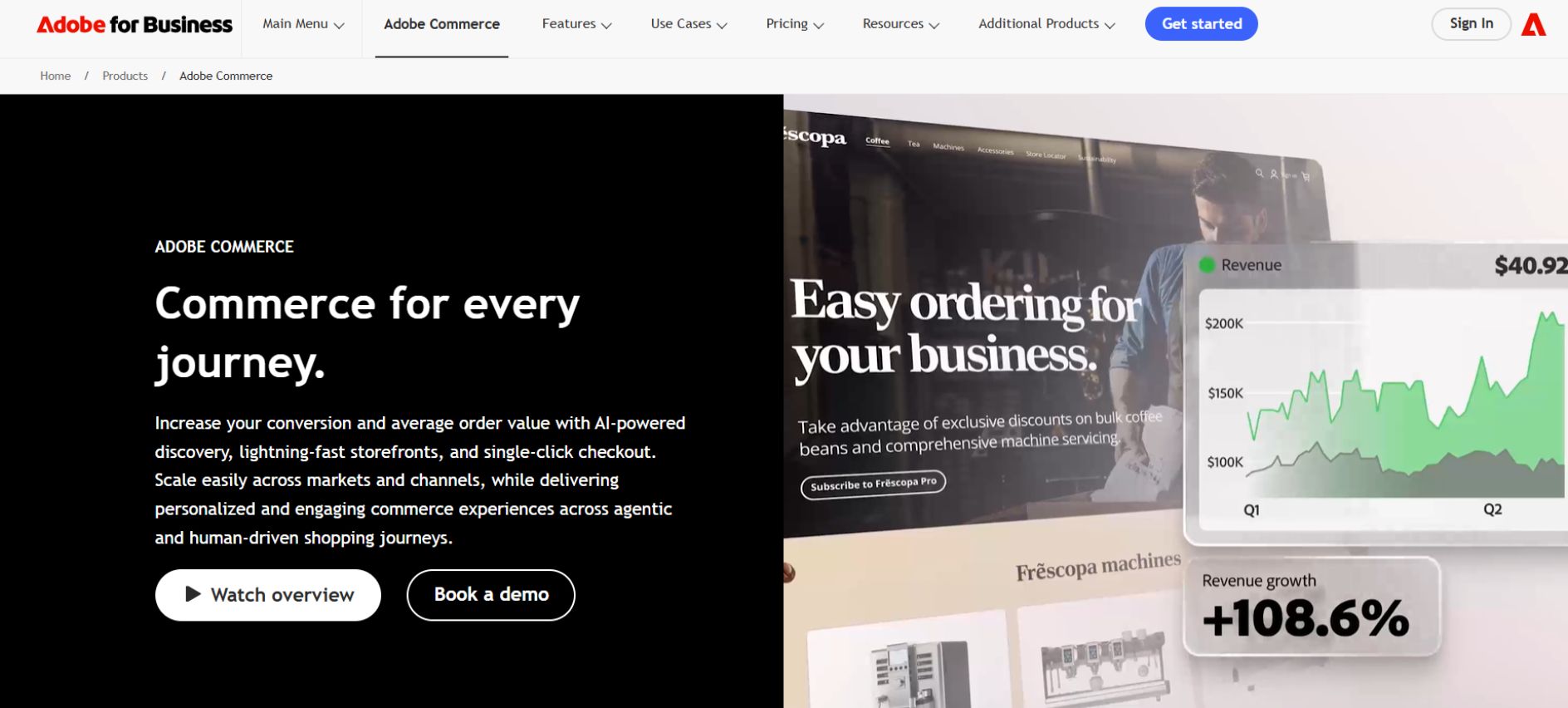
Magento (Adobe Commerce) is a powerful eCommerce platform built for enterprise businesses and large online stores. It offers complete control over technical SEO, making it ideal for websites with extensive product catalogs and advanced optimization requirements.
Key Features
- Full control over URLs, metadata, and site architecture
- Advanced schema markup and SEO customization
- Scalable platform for large product catalogs
- Supports multilingual and multi-store websites
- Extensive customization through extensions and APIs
Pricing
| Plan | Price |
|---|---|
| Magento Open Source | Free |
| Adobe Commerce | Starting at $22,000/year |
Advanced SEO Tips
- Use canonical tags to prevent duplicate content.
- Optimize layered navigation with SEO-friendly filters.
- Add structured data for products, reviews, and FAQs to improve visibility in search and AI-generated results.
- Use SEO extensions to automate metadata, XML sitemaps, and technical optimization.
5. Wix Ecommerce
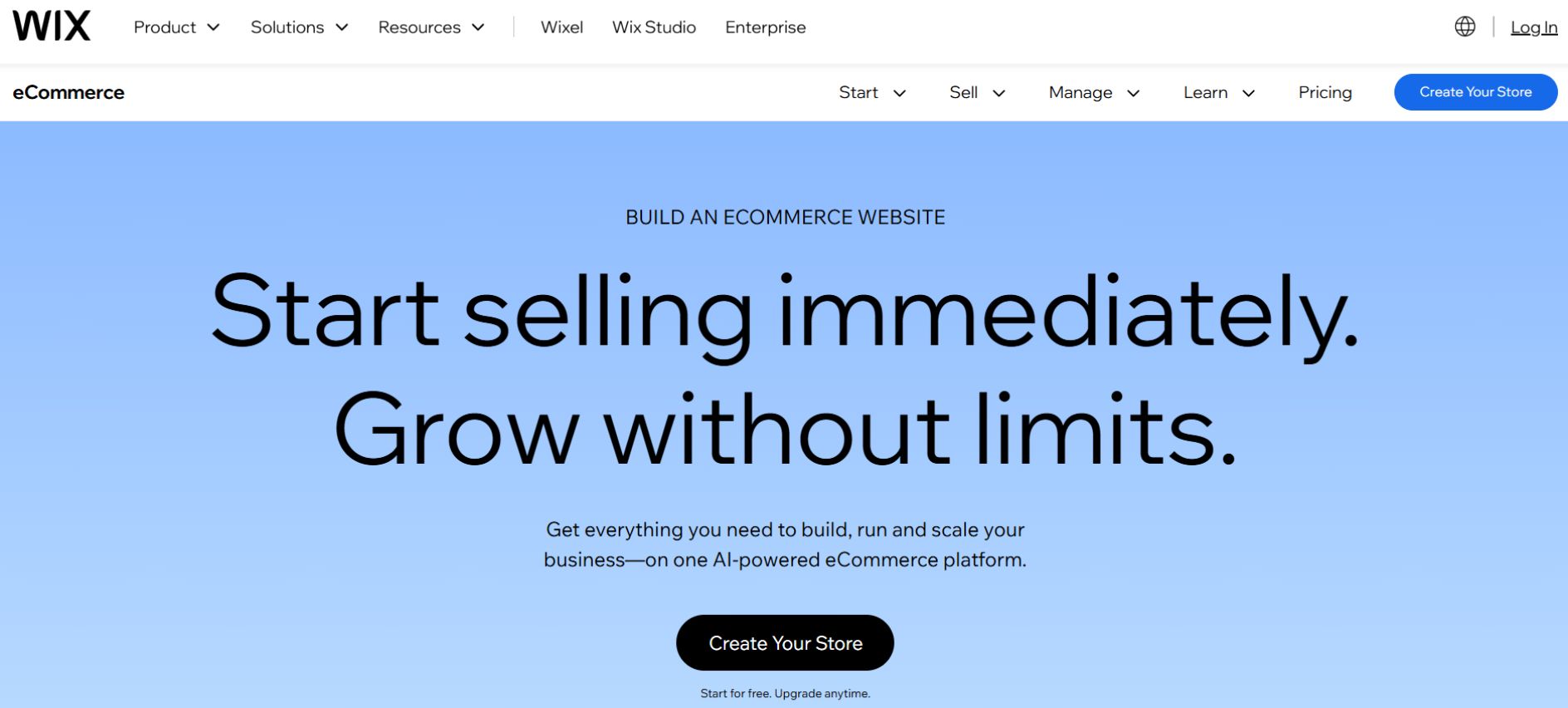
Wix Ecommerce is a beginner-friendly platform that combines ease of use with essential SEO features. It’s a great choice for small businesses and startups looking to build an SEO-friendly online store without technical expertise.
Key Features
- Built-in SEO tools with SEO Wiz guidance.
- Customizable meta titles, descriptions, and alt text.
- Mobile-responsive templates.
- Fast hosting with automatic SSL.
- Easy drag-and-drop website builder.
Pricing
| Plan | Price |
|---|---|
| Business Basic | $27/month |
| Business Unlimited | $32/month |
| Business VIP | $59/month |
Advanced SEO Tips
- Use SEO Wiz to optimize pages and products.
- Write unique, keyword-rich titles and meta descriptions.
- Optimize images with descriptive filenames and alt text.
- Publish blog content to target long-tail keywords and strengthen internal linking.
6. Squarespace
Squarespace is a user-friendly eCommerce platform known for its professionally designed templates and built-in SEO features. It is best suited for small to medium-sized online stores that prioritize visual design, ease of use, and essential SEO capabilities.

Key Features
- Customizable URLs, meta titles, and descriptions.
- Automatic XML sitemaps and SSL security.
- Mobile-responsive, professionally designed templates.
- Built-in blogging and analytics tools.
- Easy drag-and-drop website management.
Pricing
| Plan | Price |
|---|---|
| Business | $33/month |
| Basic Commerce | $36/month |
| Advanced Commerce | $65/month |
Advanced SEO Tips
- Customize page URLs, titles, and meta descriptions for every product.
- Use built-in analytics to monitor SEO performance and user behavior.
- Publish blog content to target additional keywords and improve internal linking.
- Optimize images with descriptive filenames and alt text, and implement structured data where possible to improve visibility in search and AI-generated results.
Key SEO Features to Look for in an Ecommerce Platform
Not all eCommerce CMS software are optimized for SEO. When evaluating a platform, consider the following features:
Customizable URLs: Clean, keyword-rich URLs help search engines understand your pages and improve rankings. They are easier for users to read, remember, and share, which enhances visibility and click-through rates.
Fast Loading Speed: A website that loads quickly improves user experience and reduces bounce rates. Google favors fast websites, making speed a critical SEO factor. Optimized images, caching, and reliable hosting enhance performance.
Mobile-Friendly Design: Responsive design ensures your website displays correctly on smartphones and tablets. Mobile optimization improves user experience, increases engagement, and is essential since Google prioritizes mobile-friendly sites in search rankings.
Structured Data & Schema Markup: Adding schema markup helps search engines understand your content, enabling rich snippets like prices, ratings, and availability. This increases visibility in search results and improves click-through rates.
SEO Plugins & Tools: Built-in or third-party SEO tools simplify optimization. They manage meta tags, sitemaps, redirects, and on-page SEO, making it easier to improve search engine rankings without technical expertise.
Easy Navigation & Internal Linking: Clear menus, categories, and internal links help users and search engines find pages quickly. Proper structure enhances crawlability, distributes link authority, and improves overall site SEO.
Content Management Capabilities: Platforms that support blogs and content pages allow regular content updates. Fresh, optimized content attracts organic traffic, improves rankings, and establishes authority in your niche.
How to Make an Ecommerce Website SEO-Friendly
Even the e-commerce platform needs proper SEO optimization to rank well on search engines and attract customers. Here’s how to make your website SEO-friendly:
Keyword Research
Start by identifying the words and phrases your potential customers use to search for your products. Use tools like Google Keyword Planner, Ahrefs, or SEMrush. Include these keywords naturally in product titles, descriptions, category pages, and metadata to help search engines understand your content.
Optimize Product Pages
Each product page should have a unique and detailed description. Avoid copying manufacturer content. Add high-quality images with descriptive alt text and use structured data (schema markup) to help search engines display rich results, such as star ratings, prices, and availability.
Fast Page Load Times
Page speed is critical for both SEO and user experience. Compress images, enable browser caching, minimize code, and choose reliable hosting. A fast-loading site reduces bounce rates and increases conversions.
Mobile Optimization
Most shoppers browse on smartphones. Make sure your website is responsive, meaning it adapts to different screen sizes. Buttons, menus, and images should be easy to navigate on mobile devices. Google prioritizes mobile-friendly sites in search results.
Internal Linking
Connect your website pages through links. Link related products, categories, and blog articles. This improves crawlability for search engines and helps users navigate your site, keeping them engaged longer.
Content Marketing
Regularly publish blogs, buying guides, FAQs, and tutorials related to your products. Quality content marketing attracts organic traffic, builds authority in your niche, and provides more opportunities to target keywords.
Secure Website (HTTPS)
Security matters. Use HTTPS to encrypt user data. Google considers secure websites as a ranking factor, and customers are more likely to trust a site that shows it is safe.
Conclusion
Choosing the right eCommerce platform helps your store rank better on search engines. Platforms like Shopify, WooCommerce, and BigCommerce offer strong SEO features, while Wix and Squarespace work well for smaller stores. Good SEO tools, speed, and mobile support help your business grow and attract more customers online.
At Webcazador, we help businesses choose, implement, and optimize the right platform while ensuring it is fully SEO-ready from day one. Whether launching a new store or migrating from an existing system, our experts guide clients toward solutions that deliver strong performance and scalable growth.
FAQs
Related Posts

Google No Longer Supports FAQ Rich Results for Most Websites
Google no longer shows FAQ rich results for most websites. FAQ schema now mainly works for trusted government and health websites only.
By Sahil Bansal

Local SEO vs National SEO: Which Strategy Is Right for Your Business?
Local SEO works best for location-based businesses, while national SEO helps brands reach wider audiences across multiple cities or regions.
By Sahil Bansal

Website Migration SEO Checklist for 2026
The website migration SEO checklist is a process to protect rankings, traffic, and backlinks during a website transition. It covers SEO best practices to ensure a smooth migration without harming SEO performance.
By Sahil Bansal