
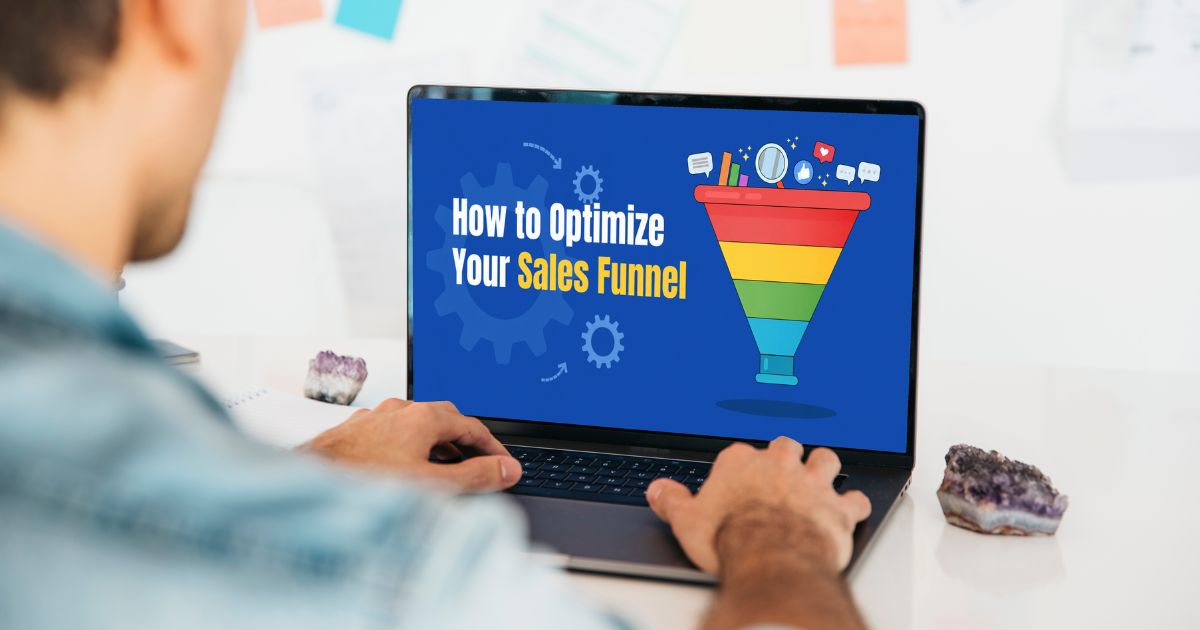
How to Optimize Your Sales Funnel to Grow from $400K to $500K Monthly
 Published:
May 8th, 2026
Published:
May 8th, 2026

Optimize your sales funnel by improving conversions, targeting high-intent leads, increasing AOV, and focusing on retention to scale from $400K to $500K monthly.

Sahil Bansal
Founder & CEO
13 min read
Hitting $400K in monthly revenue is a strong milestone, but it is also where many businesses start to stall. Growth slows, results become inconsistent, and simply doing more no longer delivers the same impact.
The move from $400K to $500K is not about pouring more money into ads or chasing extra traffic. In most cases, the real opportunity lies in improving how your existing sales funnel performs by turning more visitors into leads and more leads into paying customers.
This guide focuses on optimizing each stage of your funnel with a clear, data-driven approach. No guesswork, just practical strategies to help you unlock the next level of revenue growth.
What Changes Between $400K and $500K Revenue Levels?
At the $400K stage, many businesses rely on strategies that helped them grow early on. But pushing to $500K requires a more refined and structured approach. The difference is not about doing more, but about doing things smarter and with greater precision.
Growth becomes data-driven, not experimental
Decisions are no longer based on assumptions or trial and error. Instead, every change is backed by data, analytics, and performance insights. You focus on what is already working and scale it strategically.
Small improvements create a large revenue impact
At this level, even minor increases in conversion rates or average order value can generate significant revenue gains. You do not need massive changes, just consistent optimization across the funnel.
Focus shifts from acquisition to conversion and retention
Instead of constantly chasing new traffic, the priority becomes converting existing visitors more effectively and increasing the lifetime value of current customers.
Funnel visibility and tracking become critical
You need clear visibility into every stage of your funnel. Tracking user behavior, identifying drop-off points, and measuring performance accurately allows you to fix issues quickly and scale efficiently.
Understanding Your Current Sales Funnel
Before you can scale from $400K to $500K, you need a clear picture of how your current funnel is performing. Without this clarity, it is easy to focus on the wrong areas and miss the real opportunities for growth.
Audit Your Funnel Stages
Start by breaking your funnel into key stages and evaluating how each one performs:
Awareness: This is where potential customers first discover your brand through channels like search, ads, or social media. The goal here is to attract the right audience, not just more traffic.
Consideration: At this stage, users are exploring your offer, comparing options, and deciding if you are the right fit. Your content, messaging, and value proposition play a major role here.
Conversion: This is where users take action, such as making a purchase or booking a call. A smooth, clear, and trustworthy process is essential to turn interest into revenue.
Retention: After the first purchase, the focus shifts to keeping customers engaged and encouraging repeat business. Strong retention can significantly increase overall revenue without additional acquisition costs.
Identify Key Drop-Off Points
Once your stages are clear, look for where performance drops.
- Where users leave: Identify pages or steps where visitors exit your funnel. High bounce rates or abandoned checkouts often point to friction or lack of clarity.
- Where conversions slow down: Some stages may not lose users entirely but show low conversion rates. These areas often need better messaging, stronger offers, or improved user experience.
Track the Right Metrics
To make informed decisions, you need to monitor the metrics that directly impact growth:
- Conversion rate per stage: Understand how effectively each step moves users forward in the funnel.
- Customer acquisition cost (CAC): Measure how much you spend to acquire each customer and ensure it remains profitable.
- Average order value (AOV): Track how much customers spend per transaction and look for opportunities to increase it.
- Customer lifetime value (LTV): Evaluate the total revenue a customer generates over time to guide retention and upsell strategies.
A well-analyzed funnel gives you a clear roadmap. Once you know where the gaps are, you can focus your efforts on improvements that directly contribute to revenue growth.
Step 1: Optimize Top-of-Funnel (Traffic Quality Over Quantity)
At this stage, growth depends on attracting the right audience rather than simply increasing traffic. Many businesses waste resources on low-quality visitors who are unlikely to convert, which slows down overall growth. Instead, the focus should be on high-intent users who are actively looking for solutions and are more likely to move through your funnel.
Improving targeting across SEO, paid ads, and content helps ensure you reach the right people. At the same time, your messaging must align with user intent so visitors immediately see the value in your offer. When you bring in better-qualified leads, conversions become much easier throughout the entire funnel.
Step 2: Improve Lead Capture & Qualification
To scale your revenue, you need to capture not just more leads, but better ones. Start by optimizing your landing pages with a clear value proposition and strong call-to-action so visitors immediately understand what they will gain. Instead of generic offers, use lead magnets that attract serious buyers who are more likely to convert.
Adding simple qualification steps like forms, quizzes, or filters helps you focus on high-quality prospects. At the same time, reducing friction through shorter forms and faster load times ensures users do not drop off before taking action. A smoother and more targeted lead capture process directly improves conversion potential.
Step 3: Strengthen Your Nurture Process
Not every lead will convert immediately, which is why a strong nurture process is essential for moving prospects through the funnel. Well-crafted email sequences can educate potential customers, build trust, and keep your brand top of mind until they are ready to take action.
Retargeting campaigns also help re-engage warm leads who have shown interest but have not yet converted. Addressing common objections early, whether related to pricing, trust, or expected results, can remove hesitation and make decision-making easier. Adding social proof such as reviews, testimonials, and case studies further strengthens credibility and gives prospects the confidence to move forward.
Step 4: Increase Conversion Rates (Bottom-of-Funnel Optimization)
At the bottom of the funnel, small improvements can lead to significant revenue growth. Your sales pages should clearly communicate benefits, build credibility, and create a sense of urgency so prospects feel confident taking action. Optimizing your calls-to-action by improving their placement, wording, and timing can further increase conversions.
It is also important to simplify the checkout or booking process to remove any friction that might cause users to drop off. Adding guarantees or risk-reversal elements helps reduce hesitation and builds trust. Even a small increase in conversion rate at this stage can contribute significantly to reaching the next revenue milestone.
Step 5: Boost Average Order Value (AOV)
Increasing your average order value is one of the fastest ways to grow revenue without needing more customers. By offering relevant upsells and cross-sells, you can encourage customers to purchase additional products or upgrade their initial choice.
Bundled offers work well by combining products or services at a perceived higher value, while tiered pricing models give customers options to spend more based on their needs. Adding simple add-ons at checkout can also capture extra revenue with minimal effort. These small adjustments can significantly increase overall revenue from the same number of sales.
Step 6: Improve Customer Retention & Repeat Revenue
Scaling to the next revenue level becomes much easier when you focus on keeping existing customers engaged. Simple follow-ups through email or SMS help maintain the relationship and bring customers back for repeat purchases. Loyalty programs can reward consistent buyers and increase long-term value.
Introducing subscription or recurring models creates predictable revenue, while strong post-purchase engagement keeps your brand top of mind. When customers continue to buy from you, growth becomes more stable and cost-efficient.
Key Insight: Retention is the fastest way to scale from $400K to $500K
Step 7: Remove Funnel Bottlenecks with Data
To scale efficiently, you need to identify and fix the weak points in your funnel. Using analytics tools like Google Analytics, CRM systems, and heatmaps helps you understand user behavior and spot where performance drops. Regular A/B testing on key pages such as landing pages, checkout flows, and emails allows you to improve results based on real data.
Consistently monitoring funnel performance on a weekly basis ensures you catch issues early and make timely improvements. When you quickly identify and fix underperforming steps, your entire funnel becomes more efficient and better aligned for revenue growth.
Conclusion
Scaling from $400K to $500K monthly revenue does not require a complete overhaul. It requires a focused, data-driven approach where we continuously optimize each stage of the sales funnel. When every step performs efficiently, small improvements can compound into meaningful and consistent revenue growth.
We believe in refining strategies based on real insights, not assumptions, so businesses can scale in a more predictable and sustainable way. We focus on performance insights, conversion improvements, and customer value to create systems that drive sustainable growth.
Stay tuned with us to explore more insightful strategies and practical guidance that help you analyze, optimize, and grow your business with confidence.
Frequently Asked Questions
Related Posts

How to Grow a Plumbing Business in Competitive Markets
Grow a plumbing business with local SEO, Google reviews, fast response times, social media marketing, and consistent customer focused service.
By Sahil Bansal

How to Create a Business Expansion Strategy That Actually Works
Create a business expansion strategy by defining clear goals, researching markets, planning resources, and executing structured steps to achieve sustainable growth.
By Sahil Bansal