
What is Conversion Rate Optimisation – A Complete 2026 Guide
 Published:
May 9th, 2026
Published:
May 9th, 2026

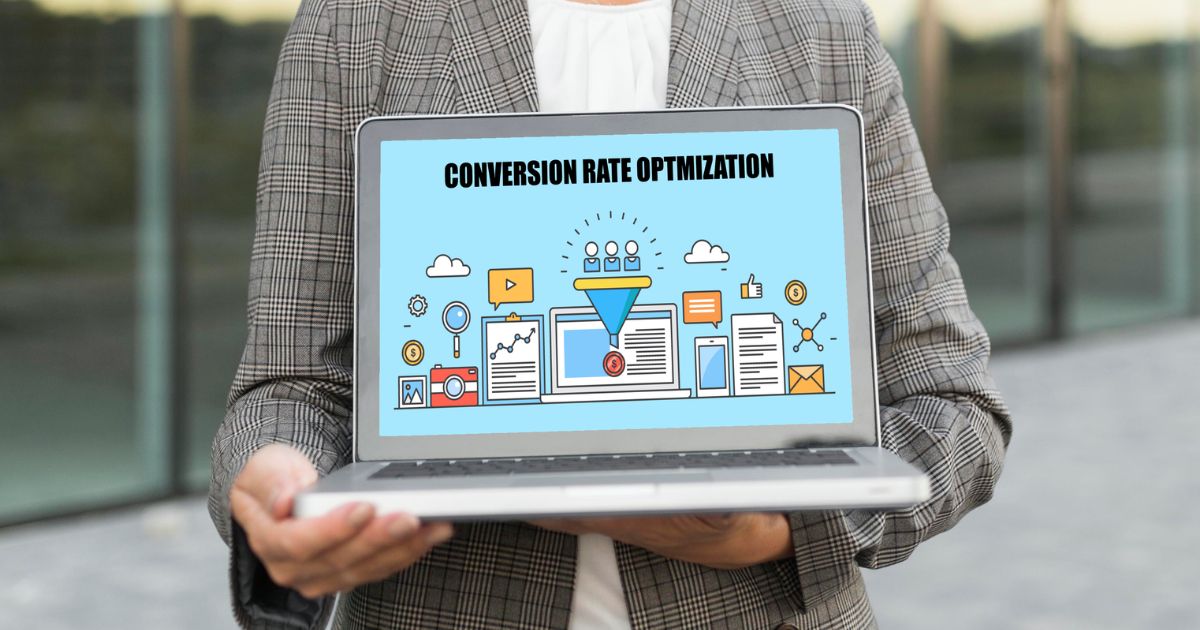
Conversion Rate Optimization (CRO) improves websites and marketing campaigns to increase conversions and user engagement. Businesses use CRO strategies and CRO tools to analyze user behavior and turn more website visitors into cus

Sahil Bansal
Founder & CEO
15 min read
Getting more traffic to your website is expensive. The real leverage lies in converting your existing traffic.
Conversion Rate Optimisation plays a key role in the success of any digital marketing campaign. It is a framework for the percentage of visitors to take an adequate action. This action can be in the form of booking a demo, signing up for a free trial, or making a purchase.
According to several studies, the average website conversion rate across industries is about 2% to 5%.
Most businesses are lagging because they simply don’t give much weightage to the conversion rate. This blog post will give you an ideal picture of what is conversion rate optimisation and how it drives every decision you make.
What Is Conversion Rate Optimization (CRO)?
Every business wishes to have more customers. Yet only 1.7% visitors take the desired action across all industries. Thus, leaving the majority of revenue untapped. This gap reflects lost sales, wasted marketing spend, and efforts. Therefore, understanding the CRO meaning is where your business can use its full potential.
Conversion rate optimisation is a strategy that takes appropriate actions to systematically improve the actions of your website visitors. A conversion is called any action that moves a visitor closer to becoming your customer. The action that a customer takes can be in the form of:
- Making a purchase
- Submitting a contact form
- Calling for a free demo
- Signing up for a trial service
Conversion rate is simply the percentage of users who are completing a desired action. Its formula is:
Conversion Rate = (Number of Conversions / Total Visitors) x 100
Take an example; If 15,000 people visit your landing page in a month and 250-300 people complete a signup, your ideal conversion rate is 2%.
What is a Good Conversion Rate?
A good conversion rate in CRO (Conversion Rate Optimisation) depends on the industry, target audience, business type, and marketing goals. In digital marketing, the average website conversion rate usually ranges between 2% and 5%, while high-performing businesses using effective CRO strategies can achieve even higher results.
For example, an e-commerce website may consider a 4% conversion rate strong, whereas a lead generation landing page may achieve conversion rates above 10%. Industries, such as healthcare, SaaS, finance, and retail, often have different CRO benchmarks for customer behavior and competition levels.
In CRO, a good conversion rate is not only measured in terms of numbers but also by how effectively your website is turning visitors into customers, subscribers, or leads. Factors such as user experience, website speed, mobile optimization, trust signals, engaging CTAs, and personalized content all play a key role in improving CRO performance.
Instead of comparing only with industry averages, businesses should focus on continuously improving their CRO strategies through A/B testing, user behavior analysis, and website optimization to get high conversion rates and long-term growth.
What is CRO in Marketing?
Simply put, CRO in marketing is the process of improving marketing campaigns, websites, and user experiences to motivate more users to take a desired action. In digital marketing, these actions are called conversions and include purchases, form submissions, sign-ups, downloads, or bookings.
The main goal of CRO in marketing is to maximize the value of existing website traffic rather than spending more money only to attract new visitors. It helps businesses understand user behavior and identify what encourages or prevents people from converting.
Marketing CRO focuses on analyzing customer journeys across different channels, such as:
- Websites
- Landing pages
- Paid advertisements
- Email campaigns
- Social media campaigns
- E-commerce stores
By optimizing these touchpoints, businesses are able to improve engagement, generate more qualified leads, and increase sales performance.
Conversion Rate Optimisation Strategies to Consider
A CRO strategy helps convert visitors into customers. It defines a roadmap that every website owner should follow to enhance their customer base. While CRO strategies vary from company to company, the general steps are the same. The process begins with the identification of key metrics and the target audience.
Then it is followed by collecting user data and feedback to form informed decisions. Additionally, you can use CRO statistics to measure conversion performance and understand user behavior. Factors such as content quality, website trust, and Google EEAT also play an important role in improving user engagement and conversion rates.
Improve Website Loading Speed
A slow website can cause high bounce rates and reduce conversions. Optimizing images, reducing unnecessary scripts, and using faster hosting help improve overall page speed and create a smoother user experience.
Optimize Call-to-Action (CTA) Buttons
Strong CTA buttons motivate users to take an appropriate action. Use clear, action-oriented text such as “Get Started,” “Request a Quote,” or “Download Now” while making buttons visually noticeable on the page.
For example, a website is replacing its general “ Submit” CTA with “ Get your Free Quote Now” CTA.
Simplify Forms
Long or complicated forms often discourage users from completing actions. Reducing unnecessary fields and creating user-friendly forms can improve lead generation and sign-up rates.
Use A/B Testing
A/B testing helps create different versions of web pages, headlines, layouts, or CTAs to identify which variation performs better and generates more conversions.
Improve Mobile Responsiveness
With growing mobile traffic, websites must provide a seamless experience across all devices. Mobile-friendly layouts, fast loading times, and easy navigation can significantly improve conversion rates.
Craft High-Quality Landing Pages
Dedicated landing pages, including focused messaging, compelling visuals, and clear offers, help guide visitors toward a specific conversion goal without distractions.
Add Social Proof
Social signals such as customer reviews, testimonials, website ratings, and case studies are helpful in building trust and influencing purchasing decisions. Social proof reassures users that others have benefited from your products or services.
Enhance Website Navigation
Simple, organized, and easy-to-understand navigation makes it easier for users to find information quickly, reduces frustration, and improves the chances of conversion.
Personalize User Experience
Personalized recommendations, location-based offers, and customised content can improve engagement by making the user experience more relevant to individual visitors.
Analyze User Behavior
Tools such as heatmaps, session recordings, and analytics are helpful for businesses to understand how visitors interact with their website and identify areas that need improvement.
Conversion Rate Optimisation Tools
Conversion Rate Optimisation (CRO) tools help businesses analyze user behavior, identify conversion barriers, and improve overall website performance to increase conversions. These tools help get valuable insights into how visitors interact with a website, allowing marketers to make data-driven decisions that improve user experience and generate better results. Moreover, these tools are helpful to improve your conversion optimisation services.
In modern digital marketing, CRO tools have become essential because they help businesses understand what is working, what is causing users to leave, and which improvements can increase conversions. From analytics platforms to heatmapping software and A/B testing tools, CRO technology guides users to improve overall website effectiveness.
Moreover, these tools are highly beneficial for improving your conversion optimisation services and identifying website issues, such as Why is my website not showing up on Google searches. You can learn about these tools to see what’s working in your favor and where you need improvement.
Website Analytics Tools
Analytics tools are one of the most important categories of CRO tools because they provide data about website traffic, user behavior, bounce rates, and conversion performance. Platforms like Google Analytics help businesses track visitor activity and identify pages where users drop off during the conversion journey.
By studying metrics such as session duration, traffic sources, and user engagement, marketers can understand which pages perform well and which areas need improvement. Analytics tools also help businesses measure the success of marketing campaigns and conversion goals accurately.
Heatmap and User Behavior Tools
Heatmap tools visually show how users interact with a website. These tools can help businesses to track clicks, scrolling behavior, and cursor movement to understand which sections attract the most attention.
Popular tools like Hotjar and Crazy Egg help identify usability problems, confusing layouts, or ignored content areas. For example, if visitors are not clicking an important CTA button, heatmap data may reveal that the button placement or design needs improvement.
Session recording features also allow marketers to watch real user interactions and detect friction points affecting conversions.
A/B Testing Tools
A/B testing tools are helpful to compare two or more versions of a webpage to determine which version has the potential to perform better. Businesses can test headlines, CTA buttons, forms, images, colors, layouts, and other design elements to get better conversion rates.
Tools such as VWO and Optimizely enable marketers to run experiments and make decisions based on real performance data rather than assumptions.
For example, changing the wording of a CTA button from “Call Now” to “Call for Free Edit” may lead to higher engagement and conversions.
Form Optimization Tools
Forms are a major part of lead generation and online sales. Form optimization tools help businesses identify issues that prevent users from completing forms successfully.
These tools analyze form abandonment rates, field completion times, and user interactions to simplify the conversion process. Shorter and user-friendly forms often improve conversion rates significantly.
Customer Feedback Tools
Understanding customer opinions and feedback plays a crucial role in overall CRO success. Businesses can use feedback tools for the collection of user insights through surveys, polls, and feedback widgets. Businesses can take information regarding what visitors like, dislike, or find confusing elements on a website.
Tools like SurveyMonkey are helpful to gather customer feedback that can guide website improvements and marketing strategies.
Conversion Rate Optimisation Examples
Example 1: Simplifying the Checkout Process
An e-commerce business revamped its website by reducing its checkout process from five steps to two steps and also added a guest checkout option. This assisted in making their purchase faster and easier for users. Thus, helping to reduce cart abandonment and increase completed sales.
Example 2: Using A/B Testing on Landing Pages
A business tests two versions of a landing page with different headlines and layouts to identify which version generates more leads. By selecting the better-performing page, the company improves its overall conversion rate and campaign performance.
Conclusion
Conversion Rate Optimisation (CRO) is an integral part of today’s digital marketing. It is centred around turning website visitors into customers, leads, or subscribers more effectively. Instead of only increasing traffic, CRO helps businesses maximize the value of their existing audience through data-driven improvements and better user experiences.
From optimizing landing pages and improving website speed to testing CTAs and simplifying customer journeys, effective CRO strategies can significantly increase conversions and overall business performance. It also helps reduce customer acquisition costs while improving engagement, trust, and return on investment.
As online competition continues to grow in 2026, businesses that invest in CRO are better positioned to improve user satisfaction, generate more revenue, and achieve sustainable long-term growth.
Our SEO agency focuses on delivering data-driven CRO strategies that help businesses improve user engagement, boost conversions, and turn website traffic into measurable business results.
Frequently Asked Questions
Related Posts

How to Get More Patient Reviews for Your Hospital and Improve Credibility
Get more patient reviews with practical strategies, including timely review requests, direct review links, QR codes, staff involvement, and proactive review management.
By Sahil Bansal

Top 10 Healthcare Marketing Strategies for Hospitals & Clinics
Patient-first healthcare marketing strategies for 2026 that help hospitals and clinics build trust, boost visibility, and attract the right patients digitally.
By Sahil Bansal

SEO vs Social Media Marketing: Which Strategy Drives Better Results in 2026?
SEO vs social media marketing: SEO drives long-term traffic and conversions, while social media boosts visibility and engagement. Best results come from combining both.
By Sahil Bansal