
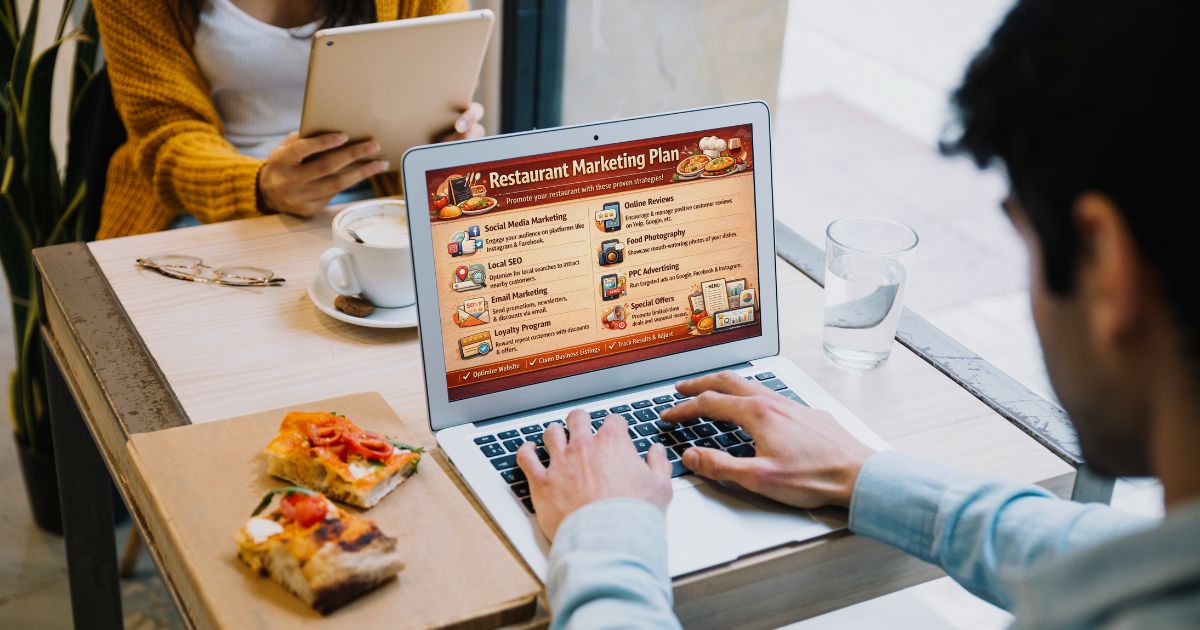
The Complete Roadmap to Creating a Restaurant Marketing Plan
 Published:
December 16th, 2025
Published:
December 16th, 2025

A restaurant marketing plan boosts visibility, attracts customers, builds loyalty, and drives growth using brand strategy, digital tools, and innovative promotions.

Sahil Bansal
Founder & CEO
15 min read
Today’s people are investing in experiences, not just meals, looking for dining moments that feel exclusive, meaningful, and indulgent. Therefore, attracting customers in food industry requires more than offering tasty dishes.
A solid marketing strategy assists restaurant owners and managers in finding who their consumers are, what sets their place apart, and how to spread the word. From social media posts to special events, every aspect of the plan contributes to the restaurant’s image and keeps consumers returning for more.
In this guide, we’ll break down how to make a restaurant marketing plan step by step. We’ll cover everything from understanding the competition to coming up with fun ways to keep diners interested. With this guideline, restaurant owners can set themselves up for success in the food industry.
Importance of a Marketing Plan for a Restaurant
A marketing plan for a restaurant is like a pathway that guides its victory. The importance of this marketing plan is to attract customers, increase sales, and build a strong brand. Here’s why having a marketing plan is crucial:
- Helps understand the target audience
A marketing plan helps restaurants identify who their customers are, what they prefer, and how they search for dining options online. This allows restaurants to target the right audience with the right message at the right time. - Defines unique selling points clearly
The plan highlights what makes the restaurant different, such as cuisine, ambiance, pricing, or service style. Clear positioning helps both customers and AI-powered platforms understand why your restaurant stands out from competitors. - Improves visibility across digital and AI platforms
With AI Overviews now shaping how people discover restaurants, a marketing plan ensures content is optimized for search engines, voice search, maps, and AI summaries. This increases the chances of your restaurant being recommended when users search for dining options. - Uses multiple promotion channels effectively
A strong plan includes strategies for social media, email marketing, paid ads, local SEO, and review platforms. Consistent activity across these channels helps AI systems recognize your restaurant as active, relevant, and trustworthy. - Tracks performance and supports data-driven decisions
Marketing plans include clear goals and metrics such as bookings, website traffic, and customer engagement. These insights help restaurants adjust strategies based on what works, including how they appear in AI search results and recommendations.
Overall, a marketing plan is essential for restaurants because it not only attracts customers and boosts sales but also improves visibility in AI Overviews, strengthens brand presence, and supports long-term growth in an increasingly competitive digital landscape.
A Step-by-Step Guide: Marketing for Restaurants
Discover how to market your restaurant with our step-by-step guide effectively. From creating attractive promos to using social media, we’ll guide you on how to attract more customers and grow your business.
1. Build a Strategy for the Brand
Establishing a significant market presence requires the effect of a brand strategy. Start by selecting your brand’s unique value proposition and target demographic. Conduct rigorous market research to understand your match better and uncover areas for distinction. Create a unified brand identity that includes your logo, colors, and messaging. Develop a comprehensive marketing strategy that defines how you intend to communicate your brand’s message to your target audience effectively.
2. Make a Solid Statement for the Mission
Making a compelling mission statement for your restaurant is essential for setting the tone and direction of your business. It should contain why your restaurant exists, what makes it special, and why customers should choose to dine with you.
Focus on placing your Unique Selling Proposition (USP), the distinctive feature that sets your restaurant apart from the competition. It could be anything from your unique culinary approach to exceptional service or ambiance.
To refine your USP, ask yourself why customers choose your restaurant over others, including national chains, regional eateries, or your closest competitors. The narrower your focus, the more precise your USP will become.
3. Find your Target Client
Understanding your market and demographics is key to effective marketing. Creating customer personas helps identify preferences such as dining times, takeout vs. dine-in, dietary needs, and preferred social media platforms. Finding the answer to the following question can help to identify your customers.
- Are they young families seeking early dinners?
- Local office workers craving quick, healthy lunches?
- College students for late-night bites?
Knowing these answers is helpful to get clear insights into your audience. After that, you can enable targeted marketing campaigns to maximize return on investment.
4. Analyze Your Competitors
Identify three to five main competitors and dig deeper for an analysis to learn their strategies. Assess their strengths, such as quality food or a vibrant atmosphere, and weaknesses, like high prices or poor marketing. Identify opportunities where you can excel, such as offering competitive pricing or implementing effective marketing strategies.
Consider hazards posed by competitors, such as prime locations or online solid branding. Pay close attention to their digital presence, including social media promotions and specials, to inform your strategic decisions. Understanding your competitors’ landscape is crucial for developing a competitive edge in the market.
5. Clarify Your Objectives of Marketing Goals
It’s crucial to define your goals clearly for your restaurant marketing strategy. By setting clear and achievable marketing goals, you can align your efforts towards driving growth, increasing brand awareness, and enhancing customer engagement in the competitive restaurant industry.
Establish Brand Recognition
Brand awareness is the stage where you make sure customers know about your restaurant and what you offer. It could involve various strategies like paid social media ads, eye-catching signage, placing ads in the local newspaper, or even appearing on television.
Essentially, it’s about getting your name out there and creating awareness among potential users. By showcasing your restaurant through different channels, you increase the chances of attracting diners and building a loyal customer base. Whether it’s through online advertising or traditional marketing methods, the goal is to make a memorable impression and draw people in to experience what your restaurant has to offer.
Acquire New Clients
After establishing your restaurant’s identity, the next step is attracting customers through enticing offerings. Consider what sets you apart: perhaps it’s cocktails, tempting happy hour deals, family-friendly promotions, or an exceptional menu.
Focus your unique selling proposition in your marketing efforts to delight potential diners. Represent what makes your restaurant special, whether it’s the ambiance, the cuisine, or the overall experience. You can intrigue and draw in customers, attracting them to choose your restaurants over competitors. Remember, highlighting your distinct offerings is key to standing out in a crowded market and attracting customers through your doors.
Build Customer Loyalty
Your most valuable customers are the ones who not only enjoy your restaurant but also spread the word to others. They eagerly share their experiences with friends, post mouthwatering food photos on social media, and sing your praises far and wide.
But how do you keep them coming back for more? This is where you should use special offers, personalized newsletters, and SMS marketing can be incredibly effective. Stay in touch with these loyal customers and reward their continued support with exclusive deals and updates.
In this way, you can nurture their enthusiasm and keep them engaged with your restaurant. It’s all about fostering a sense of community and appreciation that turns satisfied customers into lifelong advocates for your business.
6. Create Your Marketing Schedule
Once you’ve identified your target customers and set your marketing goals, it’s time to create a marketing calendar. This calendar should contain various elements like social media posts, events, direct mail campaigns, holiday promos, and other marketing initiatives.
Planning ahead allows you to stay organized and ensures a cohesive approach to your marketing efforts. While it’s optional to plan an entire year, mapping out your marketing strategies for a month or quarter ahead provides a structured framework for execution. By proactively organizing your marketing moves, you can maintain consistency, capitalize on timely opportunities, and effectively engage with your audience throughout the year.
Strategies to Maintain Online Presence
Now that you have a solid marketing plan and a clear understanding of your target audience, it’s time to take action and transform your plans into business success.
Let’s kickstart this process by focusing on your digital marketing efforts.
1. Website/ SEO
Creating an elegant and functional website for your restaurant has become more accessible than ever in this digital age. With numerous companies offering user-friendly drag-and-drop templates, you can easily build a website prepared with features like reservation and online ordering systems.
When designing your restaurant’s website, it’s essential to prioritize user experience. Ensure that the site is easy to navigate, with clear menus and readable content. Check that all hyperlinks are functional and lead to relevant pages, and use high-quality, enticing images of your food, drinks, and venue to captivate visitors.
An often overlooked but crucial aspect of website development is search engine optimization (SEO). By optimizing your site for SEO, you increase its visibility on search engines like Google. And it will ultimately lead to increased foot traffic or online orders.
2. Email Marketing
Email marketing stands out as a powerful and budget-friendly tool for restaurants to connect with their audience effectively. By leveraging email campaigns, you can share your marketing messages with a wide range of customers while keeping costs painless.
This marketing strategy not only allows you to promote new menu items, specials, and events. It will also foster stronger relationships with your customers. Through personalized and targeted email content, you can engage with your audience on a more personal level, enhancing their loyalty to your restaurant.
3. Paid Ads
Paid advertising helps restaurants reach the right audience through channels such as social media ads and paid search campaigns. These platforms are effective for attracting new customers and encouraging repeat visits.
Using geolocation targeting ensures ads are shown to people within a practical distance of your restaurant, improving budget efficiency. Advanced targeting options, including demographic and remarketing tools, allow ads to reach users based on their interests and previous interactions.
Highlighting your Unique Selling Proposition (USP) in every campaign helps differentiate your restaurant from competitors. When used strategically, paid advertising increases visibility, drives engagement, and brings more customers through your doors.
4. Social Media Platforms
Posting regular updates on social media platforms is essential for restaurants looking to grow their presence and connect with customers. Social media has become a powerful tool for small and independent restaurants, allowing them to showcase their food, ambience, offers, and daily specials to a wide audience. While building an engaged following takes time, a consistent posting schedule and clear strategy make a noticeable difference.
The key is creating content that is visually appealing, relevant, and aligned with your brand. Short videos, high-quality images, and engaging captions help encourage likes, comments, and shares. By understanding your target audience and tailoring content to their preferences, restaurants can turn followers into loyal customers and drive steady business growth.
5. Video marketing
Restaurant video marketing is a valuable investment for both social media and overall marketing campaigns. Platforms like Facebook Reels and Instagram Stories offer high open rates and strong organic reach, making them ideal for attracting attention. Short, engaging videos under 90 seconds perform best, helping maintain viewer interest while showcasing food, ambience, and behind-the-scenes moments.
Adding video to your website or landing pages can boost conversion rates by up to 80% by building trust and encouraging action. Consistent video content increases engagement, strengthens brand visibility, and helps turn online viewers into loyal, repeat customers.
Explore More Restaurant Marketing Ideas for Your Business with Us
Having a complete marketing plan and executing it is crucial for your restaurant. Making this our primary goal will attract customers to your place. However, successful marketing plans are about more than just filling seats.
You can keep existing customer relationships by maintaining a newsletter or email list. Also, keep them engaged and informed about your latest offerings and promos. Using social media platforms, you can create a viral buzz and attract a younger audience to your restaurants.
The beauty of restaurant marketing lies in its versatility. You have numerous avenues to explore and continuously refine your tactics. Whether it is optimizing your social media presence, leveraging digital advertising, or hosting special events, there is always room for innovation and improvement in your marketing strategy.
The best part? We offer full guidance and resources on restaurant marketing, providing you with ample options to delve deeper and expand your knowledge base. So, keep exploring and learning to stay ahead of the curve in the competitive restaurant industry!
Frequently Asked Questions
Optimize your Google Business Profile to be easily found by locals.
Stay active on social media with regular posts, short videos, and stories.
Encourage customer reviews to build trust and credibility.
Run targeted local ads to reach people near your restaurant.
Showcase clear branding that reflects your restaurant’s personality.
Provide an excellent in-store experience to turn first-time visitors into loyal customers.
Create visually appealing dishes or unique dining experiences.
Post short videos on Instagram Reels, TikTok, and Facebook.
Share behind-the-scenes content to connect with your audience.
Collaborate with local influencers to expand your reach.
Encourage user-generated content where customers share their experiences.
Offer limited-time promotions or signature dishes that spark excitement.
Improve local SEO so people can discover your restaurant online.
Maintain an active social media presence with engaging content.
Show real customer experiences through photos and reviews.
Offer promotions, events, or loyalty programs to bring new and repeat diners.
Use targeted advertising to reach your ideal audience.
Keep your visuals and communication clear and appealing to create lasting impressions.
Related Posts

How to Get More Patient Reviews for Your Hospital and Improve Credibility
Patient reviews build trust, boost visibility, and influence care decisions. Learn proven strategies to collect authentic feedback and strengthen your hospital’s online credibility.
By Sahil Bansal

How to Grow Your Home Health Care Business with Marketing Strategies
Take your home health care business to the next level with marketing strategies designed to increase clients and ensure lasting growth.
By Sahil Bansal

A Complete Guide to Patient Acquisition Strategies for Healthcare Practices
Discover effective patient acquisition strategies for healthcare practices to attract new patients and grow your clinic successfully.
By Sahil Bansal