
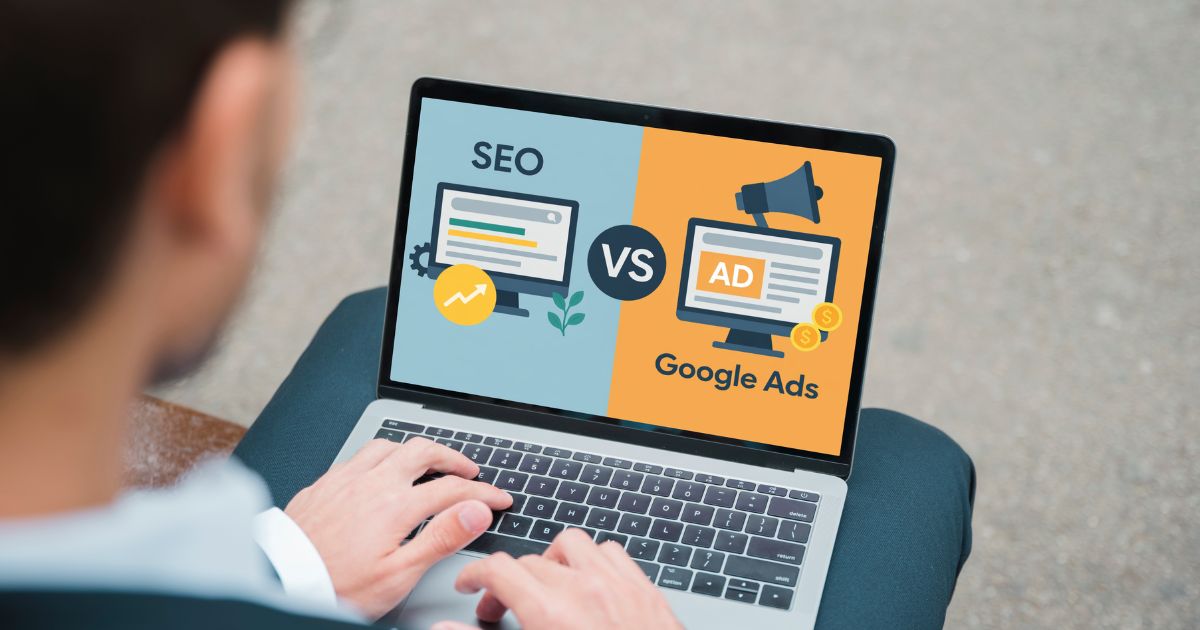
SEO VS Google Ads – Which Works Best?
 Published:
April 21st, 2026
Published:
April 21st, 2026

SEO builds long-term organic traffic and trust, while Google Ads delivers instant visibility and quick leads. Best results come from combining both strategies.

Sahil Bansal
Founder & CEO
14 min read
Businesses get this question a lot: What’s the better way to promote your website: SEO or Google Ads?
It’s an age-old question in the marketing world, and the answers sometimes turn out to be debatable. Most marketing owners at one point come to the roadblock of SEO vs Google Ads. They start pondering over which one will generate maximum revenue.
Let’s break down this debate to help all marketers and business professionals take the right call.
What are Google Ads?
Before you go deep into finding whether Google Ads is better than SEO, you should know about their core functioning. Google Ads is a popular paid advertising platform where site owners bid on keywords to have their website appear at the top of search results.
You only pay when someone clicks your ad. Thus, making it a quick way to get your business in front of active users. So, when they are searching for products, they can find you first.
A successful PPC strategy enhances your website leads, sales, and overall revenue with the following elements.
- Paid Search Ads: These trigger prospect searches for a relevant keyword. They are also called responsive-based text keywords as they appear on SERPs.
- Shopping Ads: Shopping Ads trigger search enquiries. They include minimal texts and focus mainly on your company’s products.
- Display Ads: They appear on millions of sites in Google Display Network. These are called image-based ads and they show viewer what they have already searched.
- Video Ads: These ads appear before or after long-term youtube videos. These ads not only generate views but also drive viewers towards your website.
How Google Ads Work?
Each business wants to be at the top of Google search results. They want to be visible at the top of the rankings when prospective customers search for products and services. For instance, if you are in the plumbing business, you would be among the top results when people search for “best plumbers near me”.
Google Ads primarily works on a pay-per-click (PPC) model. This means you pay only when a user clicks on your ad. Businesses appear at the top of search results by bidding on relevant keywords that a potential customer is searching for.
When a user types a query, Google runs an instant ad auction. In this auction, your ad competes with others based on your bid amount, ad quality, and relevance. Google then decides which ads to show and in what order. Your Ad Rank is decided by various factors like bid, ad relevance, expected click-through rate, and landing page experience. This means even with a low budget, a well-optimized ad can outperform competitors.
Once your ad is live, you can pitch specific audiences based on location, demographics, and search intent. You can also control your budget and optimize campaigns to reach the right audience.
What is SEO?
SEO is vital to improve your website’s visibility in organic search results. By optimizing your website’s content, structure, and authority, SEO helps you climb higher on Google’s results pages. Thus, bringing more visitors who are actively looking for what you offer. SEO is considered a long-term strategy as it delivers results over time.
Types of SEO
Various key elements work together to power SEO. These elements include:
- Keyword Research: Keyword research is used to identify th terms that a user use to find information related to your company’s products, or services. It also include analyzing factors such as search volume, search intent, and keyword difficulty.
- On-page Optimization: Adding your keywords into webpages, title tags, and meta descriptions make your website content visible in search results. On-page SEO techniques include setting up your website SEO architecture, adding internal and external links.
- Content Creation: Once you know which search terms are driving organic traffic, you can build campaigns to publish blog posts, reports, ebooks, and content that address the intent behind relevant keywords.
- Off-page Optimization: Off-page SEO tactics include external link building, publishing guest posts, and securing brand mentions to your website. Although off-page SEO doesn’t directly work on your website, but improve how your website ranks in organic searches.
- Technical Optimization: Technical SEO strategy focus mainly on updating sitemaps, improving a website’s page speed, fixing broken links, and considering duplicate content issues.
How SEO Work?
SEO (Search Engine Optimization) work is centred around helping search engines understand how your website appears for specific searches. When a user types a query into Google, the search engine scans your website and ranks pages based on how relevant they are to the user’s intent. SEO aligns your website with these ranking factors. You can use advanced SEO tools to rank your website.
SEO specialists optimize your content with the right keywords to match what people are searching for. It also ensures your website is fast and easy to navigate. Search engines also evaluate the authority of your website by looking at signals like trusted backlinks and overall user engagement.
As your website consistently provides valuable and engaging content and a good user experience, search engines begin to trust it more. This leads to better rankings and a steady flow of traffic.
SEO vs. Google Ads: What’s the difference?
When it comes to getting your products and services visible on Google, SEO and Google Ads are the two most effective marketing strategies. Though they work in completely different ways. While both work towards driving traffic and attracting potential customers, one focuses on long-term organic growth and the other focuses on instant visibility through paid campaigns.
When you consider the difference between seo and Google Ads, you need to keep certain factors in consideration. Understanding the difference between the two helps you choose the right approach based on your goals, budget, and timeline.
Inbound Vs Outbound Marketing
SEO is categorised as inbound marketing. It follows an organic strategy to attract customers to your website. It is a customer-focused approach where prospects can search for your products with the help of relevant keywords.
Google Ads is an outbound marketing where advertisers can reach out to new customers and promote their products via paid channels. It is a business-driven approach where active users react to what they are consuming.
Focus
SEO focuses primarily on making your website more visible to search engines like Google. Succeeding in your SEO strategy involves ranking your site higher for relevant keywords in Google search results.
Google Ads work beyond website traffic as it targets a much wider range of outcomes. When you work on Google Ads campaigns, you choose the goals you want to achieve, such as website traffic, leads, sales, or local site visits.
Speed of Results
SEO takes longer to generate results. SEO campaigns may show small wins quickly. However, substantial results like high traffic take time to give visible results.
Google ads tend to generate immediate results. When you launch a campaign, it competes in the ad auction. Till the time it has a high-quality score, you will see better results.
Cost
The cost of such marketing initiatives depends on factors such as goals, timeline, and initial investment. When it comes to SEO, you don’t pay for traffic. There is no Pay-per-Click. Hence, SEO generates organic traffic.
On the other hand, with Google Ads, you need to pay every time someone clicks on your website ad, whether or not that user ends up completing a conversion. If your services get a lot of clicks without many ad conversions, Google Ads will become expensive.
Upfront or Ongoing Work
Google Ads generally get benefits from regular updates and optimizations. They need more of upfront work as most efforts goes into the beginning of these ads during campaign seup.
However, SEO is considered an ongoing process. A typical SEO campaign include ongoing on-page optimization, link building strategies, content production, and technical updates.
Scalability
Scaling SEO is not as easy as it seems. You need to produce more search-driven content, optimise existing website elements, and invest in link building.
On the other hand, scaling Google ads is simpler than scaling SEO. To drive better results with Google Ads, you need to increase the campaign budget or expand the audience.
Should I use Google Ads or SEO?
SEO and Google Adwords work towards the objective of helping your brand rank on the SERP in front of prospective customers. SEO’s main job is to list your website higher on search engines so that when a user types a query, they can find your products and services. While Google ads allow you to target keyword phrases to promote your website for those keywords.
Both these strategies help enhance your overall visibility in Search. Though they have certain key points of difference, a strong digital presence requires brands to use both channels to craft a strategy where they can use them to maximize the online potential of the brand.
When to use SEO?
Is SEO better than Google Ads? Well, the answer to this question depends on your long-term business goals. It’s a wonderful idea to prioritize SEO over Google Ads in the following situations:
- SEO is a long-term solution. It generates traffic and attracts backlinks for months or years for your business.
- When organic traffic is your primary goal. When you target the right keywords, SEO can certainly drive conversion-focused outcomes. For example, targeting BOFU keywords can attract customers who are ready to buy.
- You can also use SEO if you are not seeking immediate results for your website.
When to use Google Ads?
Is Google Ads better than SEO? You can use Google Ads in place of SEO in the following cases:
- When you need immediate visibility to your website.
- When launching a new product, service, or business.
- When you want to target high-competition keywords that are hard to rank for organically.
- When you want to generate instant leads, calls, or bookings and are looking to run time-sensitive offers, promotions, or seasonal campaigns.
- When you want to target specific locations or audiences precisely.
Takeaway
You can understand the key difference between SEO vs Google Ads. Though, you can also use them together to achieve your marketing objectives. You can leverage their power by using them together to achieve your long-term business goals.
Furthermore, a right digital marketing agency can help choose the right marketing approach to attract potential customers to your website. By analyzing your business goals, target audience, and competition, they create strategies that focus on high-intent users who are more likely to convert.
Frequently Asked Questions
Related Posts

How to Get More Patient Reviews for Your Hospital and Improve Credibility
Get more patient reviews with practical strategies, including timely review requests, direct review links, QR codes, staff involvement, and proactive review management.
By Sahil Bansal

Top 10 Healthcare Marketing Strategies for Hospitals & Clinics
Patient-first healthcare marketing strategies for 2026 that help hospitals and clinics build trust, boost visibility, and attract the right patients digitally.
By Sahil Bansal

SEO vs Social Media Marketing: Which Strategy Drives Better Results in 2026?
SEO vs social media marketing: SEO drives long-term traffic and conversions, while social media boosts visibility and engagement. Best results come from combining both.
By Sahil Bansal