
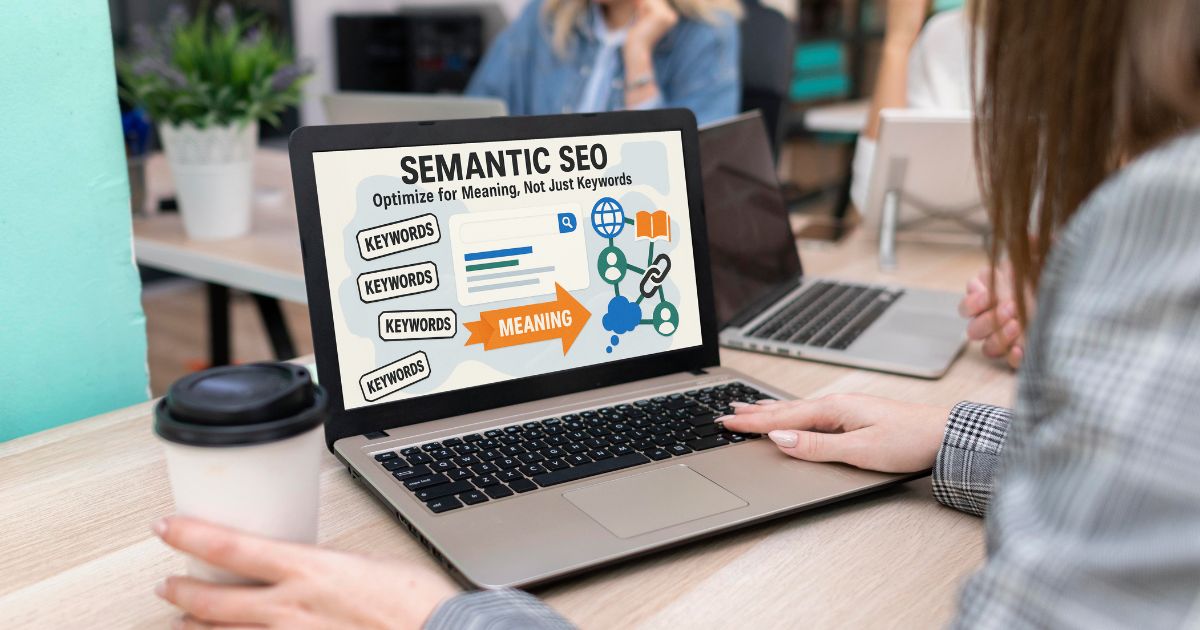
How to Leverage Semantic SEO to Increase Website Rankings
 Published:
April 21st, 2026
Published:
April 21st, 2026

Semantic SEO helps search engines interpret the meaning of your content by focusing on subjects, intent, and related ideas to enhance Google rankings.

Sahil Bansal
Founder & CEO
13 min read
Modern search engines are smarter than ever, they aim to understand what users mean, not just what they type. Semantic SEO is a strategic approach that optimizes content around meaning, intent, and connected concepts, helping websites rank for more relevant searches and reach the right audience.
This guide breaks down everything you need to know about semantic SEO, including what it is, why it’s important, and how it works within modern search engines. In addition, this article explains the key differences between semantic SEO and traditional SEO, along with step-by-step insights into semantic keyword research.
By the end, you’ll have a clear understanding of how to create content that matches user intent, strengthens topical authority, and drives long-term organic growth.
What is Semantic SEO?
Semantic SEO means optimizing your website and content based on the meaning and intent behind keywords, rather than focusing only on exact keyword matches. It leverages semantic search, where search engines understand the relationships between words and concepts to deliver more relevant results.
For example, if a user searches for best SEO content writing services, Google will look beyond the exact phrase and consider related terms like professional SEO content, content writing for SEO, or SEO copywriting services. This allows the search engine to provide comprehensive answers by understanding the broader context of the query.
Key Elements That Drive Semantic SEO
- Search Intent Optimization: Identify whether users are looking for information, comparing options, or ready to take action. Creating content that matches their intent improves relevance and engagement.
- Contextual Topic Coverage: Instead of focusing on one keyword, cover the topic in depth by naturally including related ideas, subtopics, and supporting concepts. This helps search engines understand the full context of your content.
- Entity-Based Understanding: Search engines recognize entities such as brands, people, places, and concepts. By clearly referencing and connecting these entities, your content becomes easier for search engines to interpret accurately.
- Natural Language Usage: Write content the way people naturally speak and search. Using synonyms, related phrases, and conversational language improves semantic relevance and helps content rank for a wider range of queries.
- Internal Contextual Linking: Linking related pages within your website strengthens topical relationships and helps both users and search engines navigate your content more effectively.
Why Is Semantic SEO Important?
Google’s main goal is to provide the best possible experience for users. People don’t search just to find one short answer; they want to understand a topic fully.
When someone searches, they often have follow-up questions after getting the first answer. Semantic SEO helps by creating content that covers all related questions in one place, instead of forcing users to click multiple pages or search again.
This makes the search experience smoother and more helpful. Users can learn more in less time, stay on one page longer, and feel satisfied with the information they find.
Overall, semantic SEO improves search quality by delivering deeper, more meaningful content that matches what users actually want, not just the exact words they type.
Here you can learn the benefits of semantic SEO:
1. Higher Website Engagement
When users quickly find answers on your site, they stay longer and explore more pages. This increased time and interaction show s search engines your content is valuable, helping improve your website’s ranking and visibility in search results. Conducting a regular SEO audit ensures your content aligns with user intent, identifies gaps in semantic coverage, and improves overall site performance
2. Builds Trust and Authority
Google uses E-E-A-T (experience, expertise, authoritativeness, trustworthiness) to judge content quality. Semantic SEO improves these by providing relevant, accurate, and user-focused content. This builds your reputation as a reliable source, boosting your website’s credibility and search performance.
3. Improves Search Rankings
Search engines prefer content that thoroughly answers user questions rather than pages stuffed with keywords. Semantic SEO focuses on topic depth and user intent, increasing the chances your page ranks higher in search results and attracts more organic traffic.
4. Delivers Better Quality Content
By covering topics in detail, semantic SEO helps you create comprehensive content that meets all user needs. This reduces the need for visitors to look elsewhere, enhancing user satisfaction and establishing your website as a valuable resource.
How Does Semantic SEO Work?

Semantic SEO uses several techniques to help search engines understand your content’s deeper context and how it fits into broader topics.
1. Search Intent Optimization
Understanding why a user searches is critical. Search intent usually falls into three categories:
- Informational: The user seeks knowledge or answers (e.g., what is semantic SEO?).
- Navigational: The user wants to find a specific website or page (e.g., Webcazador SEO blog).
- Transactional: The user intends to make a purchase or complete an action (e.g., buy SEO tools).
By tailoring your content to the user’s intent, you improve relevance and increase engagement.
2. Natural Language and Contextual Relationships
People speak and search naturally, not like robots typing keywords. Semantic SEO uses synonyms, related phrases, and conversational language to reflect this.
For instance, for the keyword semantic SEO, related terms could include semantic keywords, semantic search meaning, or semantic content. Incorporating these keyword variations helps your content appear for a broader set of queries.
3. Google’s Knowledge Graph and NLP
Google’s Knowledge Graph stores data about entities people, places, things, and their relationships. Natural Language Processing (NLP) lets Google analyze language patterns and infer meaning.
Semantic SEO aligns your content with these systems by organizing topics clearly and using related terms to help Google associate your pages with relevant entities and concepts.
4. Entities, Ontologies, and Topic Modeling
Entities are individual concepts or things, like SEO, Google, tap repair. Ontologies describe how entities relate (e.g., SEO is part of digital marketing). Topic modeling groups related content themes.
By structuring your content around entities and their relationships, you create topical authority and make it easier for search engines to understand your site’s purpose.
5. Structured Data and Schema Markup
Adding structured data, often referred to as SEO semantic markup, in JSON-LD format helps search engines better understand your content, such as products, articles, reviews, and FAQs. This can enhance search listings with rich snippets and improve click-through rates.
Semantic SEO Tools That Make Optimization Easier
Search engines like Google are no longer just looking at the words you type into them. Instead, they try to understand what you actually mean when you search for something. This is why SEO has shifted from just using keywords to using semantic SEO, a smarter way to optimize content based on meaning, context, and intent.
If you want your website to show up in more searches, then learning about semantic SEO tools and how they can help with automation is very important. Let’s explore what this means and how these tools can boost your digital strategy.
Role of Semantic SEO Tools in Modern SEO
Semantic SEO tools help automate and streamline the process of finding semantically related keywords, user intent, content gaps, and structured data. These tools assist in:
- Discovering semantically related terms and topics.
- Understanding searcher intent and behavior.
- Building comprehensive content outlines.
- Automating structured data markup (schema).
- Monitoring and improving topical authority.
Using automation allows you to scale your SEO efforts efficiently. Instead of manually researching topics and keyword clusters, these tools deliver data-driven insights to guide your content strategy.
Top Semantic SEO Tools to Consider
- Surfer SEO
Surfer helps you optimize your content by comparing it with top-ranking pages. It analyzes keywords, related terms, headings, and structure. It uses NLP (Natural Language Processing) to suggest relevant terms you should include to increase your chances of ranking. - Frase
Frase is an AI-powered content tool that identifies what users are searching for and helps you build content briefs. It shows related questions, topics, and competitor content gaps. It also automates semantic optimization by showing what terms to include semantically. - MarketMuse
MarketMuse analyzes your entire site and gives suggestions to improve topical authority. It uses AI to map topic clusters, suggests internal linking opportunities, and identifies missing content. This tool is especially useful for enterprise sites. - SEMrush & Ahrefs
While these are primarily known for traditional SEO, their keyword tools now include semantic variations, intent markers, and topic clustering features. They’re also useful for discovering what your competitors are doing semantically. - InLinks
This tool is designed specifically for semantic SEO. It creates knowledge graphs for your site, manages internal linking, and adds schema markup automatically based on the entity it recognizes in your content. - Clearscope
Clearscope focuses on optimizing content using LSI (Latent Semantic Indexing) keywords. It provides a content grade, related keyword suggestions, and recommendations for improving semantic relevance.
Benefits of Automating Semantic SEO
- Improved rankings: Search engines better understand your content, increasing visibility across long-tail and related terms.
- Content depth: Automation ensures you don’t miss important subtopics, making your content more comprehensive.
- Faster content creation: Tools generate outlines and briefings to speed up writing without compromising quality.
- Higher topical authority: Covering a subject thoroughly improves your website’s expertise in that area.
- Reduced guesswork: Tools use AI and NLP to provide data-backed insights, reducing reliance on trial-and-error strategies.
Note: Semantic SEO helps websites create better content that search engines and users can easily understand. It allows you to build strong topical authority, improve long-term organic rankings, and match how Google’s AI-driven search systems work today. This approach also increases the chances of your content appearing in featured snippets and “People Also Ask” results.
Although semantic SEO takes more time, planning, and research than traditional SEO, the effort leads to higher-quality and more useful content. Tracking results may be harder with basic keyword tools, but the long-term benefits of better visibility, engagement, and trust clearly outweigh these challenges.
The Impact of Semantic Search on Traditional SEO

In recent years, semantic search has revolutionized the way search engines understand and rank content. Unlike traditional SEO, which focused on exact keywords, semantic search emphasizes user intent, context, and the relationships between concepts. This evolution has reshaped how businesses approach SEO, demanding strategies that go beyond simple keyword targeting.
Shift from Keywords to User Intent
The rise of semantic search has fundamentally transformed traditional SEO. Whereas traditional strategies relied heavily on exact-match keywords and link-building, modern search engines prioritize understanding the meaning behind queries. They consider synonyms, related terms, and contextual relationships to deliver more relevant and accurate results.
Implications for Traditional SEO Practices
As a result, some conventional SEO techniques, such as keyword stuffing or rigid on-page optimization, have become less effective. Today, content strategies must focus on comprehensive topic coverage, entity optimization, and semantic relevance, ensuring that search engines can fully grasp the depth and value of the content.
Aligning Content with the Buyer’s Journey
Semantic search also encourages businesses to align content with the buyer’s journey. By addressing the awareness, consideration, and decision phases, brands can create content that answers user questions, resolves pain points, and guides prospects toward conversion.
Long-Term Benefits of Semantic SEO
Ultimately, semantic search raises the standard for content quality and relevance. While traditional SEO still matters, it is now part of a broader strategy that emphasizes contextual understanding, topic authority, and long-term user engagement. Adapting to semantic search not only improves search visibility but also fosters meaningful connections with audiences, ensuring sustainable growth in a competitive digital environment.
Conclusion
Semantic SEO is the future of digital search. By optimizing your content for meaning, context, and intent, you align with how search engines and users interact today. Instead of focusing solely on keywords, semantic SEO helps you understand your audience and meet their needs more effectively.
Using structured data, topic clusters, and automation tools, you can build lasting authority, visibility, and stronger content credibility. Though it requires effort upfront, the payoff in engagement, rankings, and long-term SEO performance makes it a smart investment.
At Webcazador, we help businesses implement semantic SEO strategies that align with modern search engine algorithms. Whether creating new content or improving existing pages, our team provides expert guidance and actionable insights to help your website rank higher and perform better.
Frequently Asked Questions
Related Posts

Google No Longer Supports FAQ Rich Results for Most Websites
Google no longer shows FAQ rich results for most websites. FAQ schema now mainly works for trusted government and health websites only.
By Sahil Bansal

Local SEO vs National SEO: Which Strategy Is Right for Your Business?
Local SEO works best for location-based businesses, while national SEO helps brands reach wider audiences across multiple cities or regions.
By Sahil Bansal

Website Migration SEO Checklist for 2026
The website migration SEO checklist is a process to protect rankings, traffic, and backlinks during a website transition. It covers SEO best practices to ensure a smooth migration without harming SEO performance.
By Sahil Bansal