
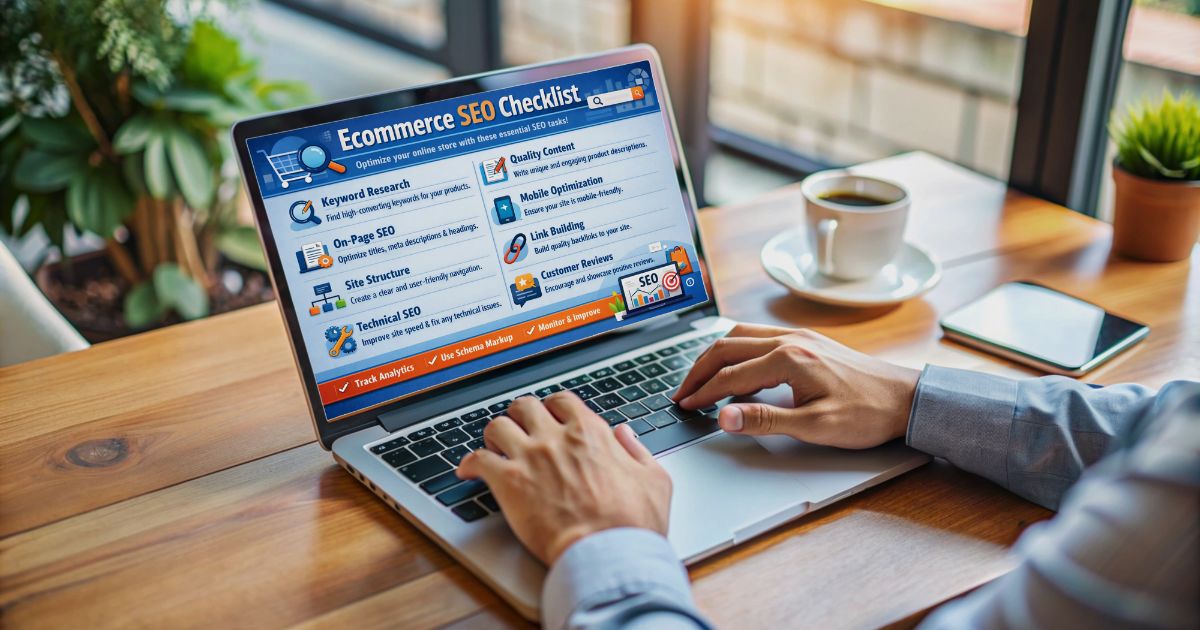
Essential Ecommerce SEO Checklist to Increase Organic Sales
 Published:
December 12th, 2025
Published:
December 12th, 2025

Boost your ecommerce sales with a complete SEO checklist covering technical setup, product pages, content, UX, off-page SEO, and performance tracking.

Sahil Bansal
Founder & CEO
13 min read
- Why Are eCommerce SEO Services Crucial for Online Stores?
- A Comprehensive SEO Checklist for Ecommerce Sites
- Start With a Strong Technical SEO Foundation
- Optimise Your Product & Category Pages
- Improve User Experience (UX) to Increase Conversions
- Build Trust and Credibility with Content
- Boost Organic Sales With Off-Page SEO
- Track Performance & Improve Continually
- Conclusion
Share This Article
Google is rapidly evolving into a full shopping ecosystem. With AI Overviews, voice and visual search, Shopping Graph data, and answer engines like ChatGPT, search has become personalised and highly transactional. For eCommerce brands, success now depends on being visible, credible, and easy to shop across every surface where customers search.
In this competitive environment, simply having an online store is not enough. Without a clear SEO strategy, even great products fail to reach potential buyers. Strong eCommerce SEO improves visibility, builds trust, and drives steady organic sales.
A well-structured SEO checklist ensures that every part of your store is ready to perform, from technical setup and site architecture to product content and page speed. Whether you are launching a new store or scaling an existing one, this updated eCommerce SEO checklist will help you attract consistent traffic and increase organic sales.
Why Are eCommerce SEO Services Crucial for Online Stores?
Online shopping is changing fast. We are moving into a world where customers discover products, compare options, and even complete their purchases without ever visiting your website. This shift is happening because search and shopping platforms are becoming more connected and more intelligent.
According to many digital marketing experts, product discovery now often starts on platforms like Google Merchant Center, Google Shopping, AI Overviews, Amazon’s AI tools, and even ChatGPT. These platforms pull in product information directly from your feeds, structured data, and content. This means your visibility depends on how well your product data is understood by these systems, not just how your website ranks.
We can consider the following two scenarios:
1. Product Eligibility
Getting your products indexed on Google is no longer enough. Are your products even showing up in search results? Search and AI systems now match user searches with product data, and they only show listings that meet their quality requirements.
To appear in these results, your product feed and product pages must be complete and accurate. They need to include clear attributes such as size, colour, material, price, brand, and other important details. The more structured and detailed your data is, the more likely your products will qualify to appear.
This is why optimising your Google Merchant Center feed, improving your product descriptions, and adding proper schema markup is essential. It is not only about ranking higher. It is about giving your products the chance to appear at all.
2. Brand Preference
Even if your product appears in search results, are customers choosing you over others? You still compete with many sellers offering the same or similar items. If your brand does not stand out, most shoppers will choose based on price, which reduces your margins and makes growth harder.
To avoid this, your brand needs to be the one people prefer before they even start shopping. This happens through helpful content, strong messaging, and consistent value across the customer journey. When users already trust your brand, they are far more likely to choose your product, even if other sellers offer the same item.
A Comprehensive SEO Checklist for Ecommerce Sites
Our SEO checklist for ecommerce success is designed to make your work easier. We’ve broken it down into 6 key areas that you need to focus on to see real results.
1. Start With a Strong Technical SEO Foundation
A successful e-Commerce SEO strategy begins with solid technical groundwork. When your website runs smoothly, loads quickly and is easy for both users and search engines to navigate, your chances of ranking higher increase significantly.
Ensure Your Site Is Fast and Mobile-Friendly
Speed plays a major role in both user experience and search rankings. Slow-loading pages lead to high bounce rates and fewer conversions. Make sure your store loads quickly on all devices, especially mobile, since most shoppers browse and buy using their phones. Review your Core Web Vitals to check how your site performs in terms of loading, responsiveness and visual stability. These metrics directly influence how Google evaluates your page quality.
Fix Crawlability and Indexing Errors
Search engines must be able to crawl and index your pages properly, or your products simply will not show up. Start by optimising your XML sitemap so Google can easily understand your site structure. Review your robots.txt file to ensure you are not blocking important pages. Remove duplicate URLs to avoid confusion and ranking dilution. Finally, use Google Search Console to identify and fix errors that may prevent proper indexing.
Enable HTTPS and Strengthen Site Security
Security is essential for every online store. Using HTTPS builds trust with shoppers by protecting their data during checkout. It also signals to Google that your site is safe, which can positively influence your rankings. A secure, trustworthy site leads to higher conversions and a better overall shopping experience.
Tip: These elements are essential for effective digital marketing for ecommerce, helping your store reach more customers and drive growth.
2. Optimise Your Product & Category Pages
Your product and category pages are the heart of your eCommerce store. When these pages are properly optimised, they attract the right shoppers, improve search visibility and encourage users to make a purchase.
Here’s how to strengthen them for better rankings and conversions:
1. Keyword Research for eCommerce
Start by finding the keywords your customers actually use when they shop. Focus on product-specific keywords, category-level terms and long-tail phrases that reflect clear buying intent. Look at your competitors to see which keywords they are ranking for and where there may be opportunities for you to appear. Strong keyword research ensures your pages match what shoppers are searching for.
2. On-Page Optimisation Checklist
Optimising your product and category pages is crucial for SEO and user experience. Proper structure and keyword usage can help your pages rank higher and attract more clicks.
- Ensure each product and category page is clearly structured and easy for search engines to understand.
- Create compelling SEO titles and descriptions that include your target keywords and encourage clicks.
- Use clean, readable URLs that accurately describe the product or category.
- Add proper header tags (H1, H2, H3) to break up content and make it easier to scan.
- Place keywords naturally in titles, descriptions, headings, and body text without overstuffing.
3. High-Quality Product Content
Content quality is one of the strongest factors in product page rankings. Write unique product descriptions that highlight features, benefits and reasons to buy. Add category page text that supports browsing and helps search engines understand the page theme. Avoid copy-pasting manufacturer descriptions, as this creates duplicate content and reduces your chances of ranking well.
4. Image Optimisation
Images help users understand your products, but they also play a role in SEO. Use descriptive alt tags so search engines can interpret the image content. Save your image files with clear, keyword-relevant names before uploading. Compress images to reduce file size and improve page speed without losing quality.
Tip: Applying the best SEO practices for ecommerce such as optimising product pages, using relevant keywords, and improving content quality can boost visibility and conversions.
3. Improve User Experience (UX) to Increase Conversions
A positive user experience keeps shoppers engaged, encourages them to explore more products and increases the chances of conversion. When visitors can move through your site effortlessly, they are more likely to trust your store and complete a purchase.
1. Clean Navigation and Internal Linking
Your site’s navigation should be simple and intuitive. Create a clear category structure that helps users find what they are looking for without confusion. Add breadcrumb navigation so visitors always know where they are on the site and can move back easily. Use internal links to connect related products, upsell items and guide shoppers to helpful content. This improves both user experience and SEO.
2. Reduce Bounce Rate
A high bounce rate often signals that users are not finding what they need, or that the site experience is frustrating. Keep your pages loading quickly to avoid losing impatient shoppers. Make product browsing smooth with filters, sorting options and clean layouts. Include clear and visible calls to action that guide users toward the next step, whether it is viewing a product, adding to cart or completing a purchase.
3. Increase Dwell Time
The longer shoppers stay on your site, the more likely they are to convert. Add helpful and engaging content such as FAQs, customer reviews and product videos. These elements answer common questions, build trust and give customers more reasons to stay and explore your products.
Tip: Enhance your site’s navigation, content, and engagement to boost conversions as part of effective ecommerce online marketing.
4. Build Trust and Credibility with Content
Strong content plays a key role in building trust, attracting organic traffic and guiding shoppers toward confident buying decisions. When your content answers questions, solves problems and supports customers throughout their journey, it not only improves SEO but also strengthens your brand’s credibility.
1. Blog Content That Drives Organic Traffic
Publishing helpful blog content is one of the best ways to bring in new visitors. Create buying guides that walk customers through product choices, write how-to articles that solve common problems and publish product comparison posts that help shoppers make informed decisions. This type of content attracts search traffic and positions your brand as a reliable source of information.
2. Add FAQ Sections for SEO
FAQ sections are a simple yet powerful way to improve user experience and SEO. Provide clear, structured answers to common questions related to your products, shipping, returns or usage. This helps satisfy user intent quickly and reduces the need for visitors to leave your site to find answers elsewhere.
3. Use Schema Markup
Schema markup helps search engines understand your content more clearly and can enhance how your pages appear in search results. Add product schema to display rich product details, use review schema to highlight ratings and testimonials and apply FAQ schema to make your question-and-answer sections more visible. These enhancements increase visibility and boost click-through rates.
Tip: Partnering with an ecommerce marketing expert can help you build trust and boost visibility through valuable, well-structured content.
5. Boost Organic Sales With Off-Page SEO
Off-page SEO helps increase your store’s authority, visibility and trust by strengthening signals outside your website. When other websites and real customers talk about your brand, search engines see your store as more credible, which leads to better rankings and more organic sales.
1. Build High-Quality Backlinks
Backlinks act as votes of confidence from other websites. Focus on earning links from relevant, trustworthy sources. Guest posting on industry blogs is a great way to share your expertise while earning valuable links. Brand mentions from news sites, blogs or review platforms also help boost your authority. You can even request links from suppliers, wholesalers or partners who list or feature your products. These high-quality backlinks help search engines trust your store more and improve your overall rankings.
2. Leverage Social Proof for SEO
Social proof not only influences buyers but also supports your SEO efforts. Encourage customers to leave verified reviews, as authentic feedback builds trust and strengthens your brand reputation. Influencer mentions can also help introduce your products to new audiences while sending positive signals about your brand. User-generated content such as photos, videos or testimonials adds credibility and gives search engines more context about your products.
Tip: Using social proof and earning high-quality backlinks are key elements of effective SEO for ecommerce to boost trust, improve rankings, and increase organic sales.
6. Track Performance & Improve Continually
SEO is not a one-time task. It requires ongoing monitoring and improvements to keep your store competitive. By tracking the right metrics and running regular audits, you can identify what is working, what needs attention and where new opportunities lie.
1. Measure SEO KPIs
Focus on key performance indicators that reflect real business results. Track your organic sales to see how many purchases come from search traffic. Monitor your organic traffic to measure how many people visit your store from search engines. Keep an eye on page rankings to understand how well your product and category pages are performing. Review your conversion rate to see how effectively you turn visitors into buyers. These KPIs help you understand the true impact of your SEO efforts.
2. Conduct Regular eCommerce SEO Audits
Performing routine audits helps you catch problems early and maintain strong performance. Start with a technical audit to check site speed, crawlability and indexing. Review your content to ensure it is high quality, unique and relevant. Analyse your backlink profile to confirm you are earning links from reputable sources. Finally, evaluate your user experience to make sure your site is easy to navigate and enjoyable to shop on. These audits keep your SEO strategy healthy and effective over time.
Conclusion
Following a strong eCommerce SEO checklist helps your store stay visible, trustworthy and competitive. This leads to steady organic traffic and consistent sales over time.
When the technical setup, product pages and content are properly optimised, your website becomes easier for search engines to understand and more enjoyable for customers to use.
You do not need to complete every step at once. Begin with small improvements, focus on the basics and continue adding more changes as you grow. These simple and steady actions will create long-term improvements in your organic performance.
If you need support with your SEO strategy, you can contact our specialist or book a consultation to get guidance that fits your online store.
Frequently Asked Questions
On-Page SEO: Optimizing content, product pages, meta tags, and keywords.
Off-Page SEO: Building backlinks, social proof, and brand authority.
Technical SEO: Improving site speed, mobile-friendliness, crawlability, and security.
Local SEO: Optimizing for location-based searches and Google Business listings.
We cover all four areas to ensure your eCommerce store ranks higher and reaches the right customers.
Related Posts

Google No Longer Supports FAQ Rich Results for Most Websites
Google no longer shows FAQ rich results for most websites. FAQ schema now mainly works for trusted government and health websites only.
By Sahil Bansal

Local SEO vs National SEO: Which Strategy Is Right for Your Business?
Local SEO works best for location-based businesses, while national SEO helps brands reach wider audiences across multiple cities or regions.
By Sahil Bansal

Website Migration SEO Checklist for 2026
The website migration SEO checklist is a process to protect rankings, traffic, and backlinks during a website transition. It covers SEO best practices to ensure a smooth migration without harming SEO performance.
By Sahil Bansal